
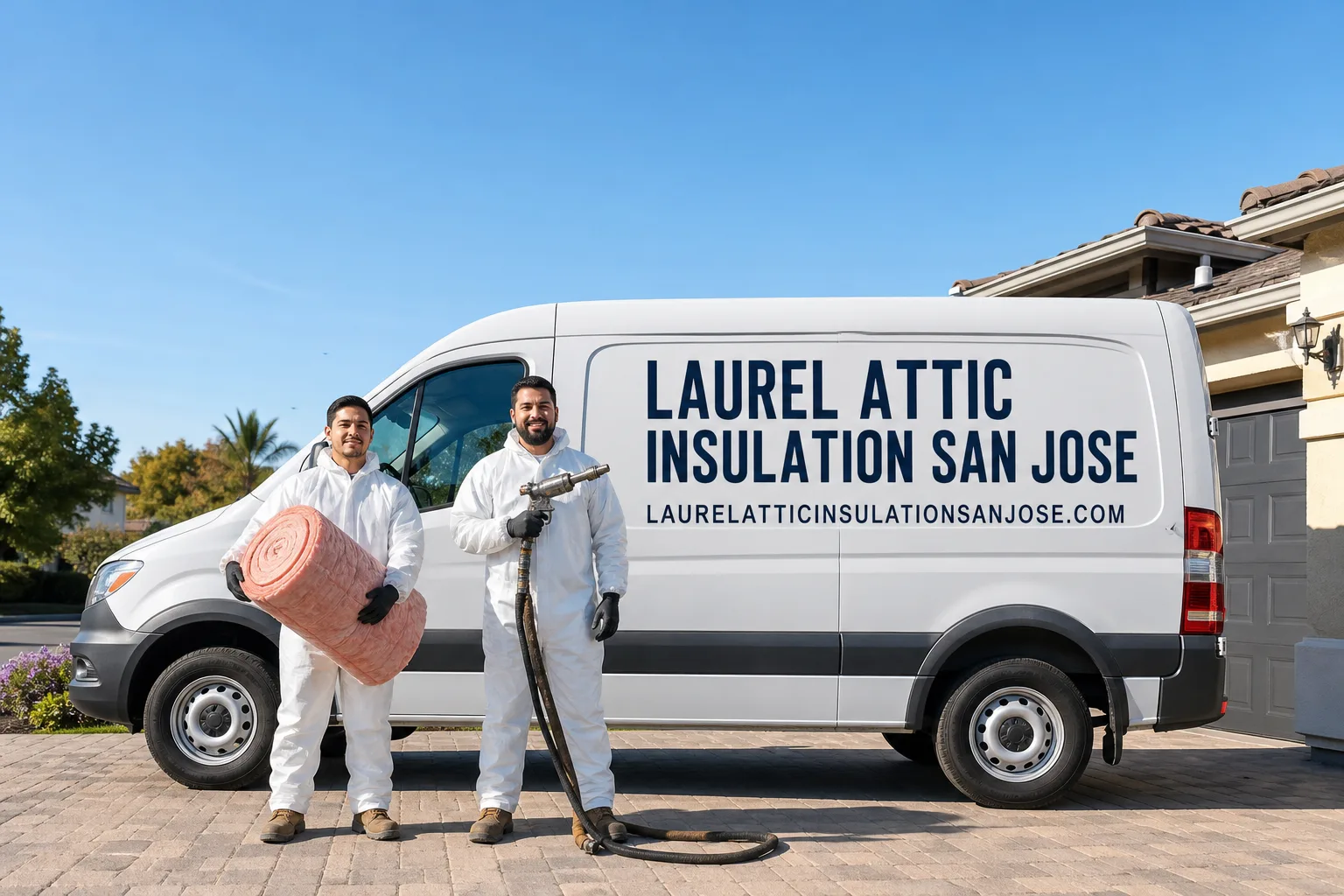
Fast, Reliable Spray Foam Insulation Across Portola Valley
Spray foam insulation in Portola Valley typically runs $2,800 – $7,500 for a standard attic or crawl space application, with closed-cell foam on the higher end due to its fire-rated chemistry. We usually complete most Portola Valley jobs in one to two days, depending on square footage and how much prep the existing framing requires. Chase Whitaker leads our crew, and we know Portola Valley’s hillside homes, its strict wildfire codes, and its exacting architectural standards. Call (669) 333-7274 for a written quote before any work begins.
Why Laurel Attic Insulation San Jose Is Portola Valley’s Preferred Spray Foam Insulation Company
Portola Valley homeowners don’t want a contractor who guesses. They want someone who already understands WUI setback rules, marine-layer moisture patterns, and the way a 1980s custom home off Alpine Road behaves differently than a newer build near Portola Road. Our Spray Foam Insulation team has worked on enough Portola Valley properties to know what’s behind the drywall before we open it. That local knowledge shows up in how we spec the foam, how we prep the cavity, and how we finish the job.
Every crew member who works in Portola Valley is background-checked and uniformed. You get a live arrival time on your phone, not a four-hour window. The Relay Visibility Guarantee means if we say we’ll be at your house at 9:15, you can track us like a rideshare. And because we’re part of the Relay Home Co. family, founded in 2003, we’re held to a standard most insulation contractors never deal with: written pricing before we start, photo proof of every step, and a 365-Day Done Right Promise covering workmanship for a full year.
We answer calls from Portola Valley homeowners at 3 a.m. the same way we answer them at 3 p.m. A live person picks up. No voicemail queue, no callback tag. If your spray foam isn’t performing, we come back and make it right. That’s not a slogan. It’s written into every invoice.
Crawl Space Spray Foam Insulation in Portola Valley
Crawl Space Spray Foam Insulation in Portola Valley addresses a problem most homeowners never see until it’s expensive: cold floors, drafty interior walls, and the kind of moisture buildup that invites mold and rodents. Many Portola Valley lots border open space, which means crawlspace entry points are basically wildlife corridors. We find rodent-damaged fiberglass and shredded vapor barriers regularly in homes off La Honda Road and throughout the Westridge neighborhood.
A standard crawl space spray foam job in Portola Valley runs $1,900 – $4,500. Closed-cell foam dominates here because it doubles as a vapor barrier and holds its shape against moisture. We remove any contaminated material, seal rim joists and penetrations, then apply foam at the depth required to hit the R-value your home needs.
Rim Joist Sealing for Hillside Homes
Rim joists are the band of framing where your floor meets your foundation wall. On a Portola Valley hillside home, that junction often sits against packed earth on one side and open air on the other. We seal those rim joists with closed-cell foam to stop the stack effect that pulls cold air up from the crawl space and pushes warm air out through your roofline. In homes with ductwork running through the crawlspace, this one upgrade often fixes uneven heating between floors.
Rodent-Proofing the Perimeter
Portola Valley’s open-space adjacency means mice, rats, and squirrels are constantly testing entry points. Spray foam alone won’t stop a determined rodent, but closed-cell foam combined with proper exclusion work closes the gaps that let them in. After foam cures, we inspect the perimeter and point out any remaining vulnerabilities. If we miss something in year one, our free second visit covers it.
Garage Spray Foam Insulation in Portola Valley
Garage Spray Foam Insulation in Portola Valley is about more than keeping a parked car warm. Most Portola Valley homes have attached garages with living space above or beside them, which means every gap in the garage ceiling leaks conditioned air into an unconditioned zone. We commonly spray garage ceilings in homes near Portola Valley Ranch and along Golden Oak Drive, where bonus rooms and guest suites sit directly over garage bays.
Garage ceiling spray foam in Portola Valley runs $1,400 – $3,800 depending on whether we’re sealing the ceiling cavity, the shared wall, or both. Closed-cell foam is the standard choice when there’s a bedroom above the garage, because it blocks airflow, adds structural rigidity, and meets fire-separation concerns with proper intumescent coating. The work takes most of a day, and you can park back inside by evening.
Shared Wall and Bonus Room Comfort
When a home theater, gym, or guest suite shares a wall with the garage, open-cell foam does excellent sound control. We’ve deadened the noise from garage door openers, air compressors, and even EV charger hum with a 2×6 cavity fill of open-cell spray foam. The difference is immediate: you stop feeling the garage through the wall.
Ceiling Cavity Air Sealing
Gaps around recessed fixtures, conduit penetrations, and drywall seams let garage air migrate upward. We seal the entire ceiling plane with spray foam, creating one continuous air barrier. For Portola Valley homes with vaulted ceiling transitions over garage bays, this step is critical. It’s also where we catch framing gaps that fiberglass batts never touched.
Trusted Brands We Service in Portola Valley
We install and service spray foam from Demilec, Owens Corning, and Icynene. We keep the most common Portola Valley-spec products staged in our Bay Area stock, so we’re not waiting on a distributor when your project is scheduled. Demilec’s closed-cell lineup is our go-to for Portola Valley’s wildfire-zone requirements, because its ignition barrier ratings line up with what the town’s building department asks for. When the job calls for open-cell acoustics or a lighter touch, we spec Owens Corning or Icynene based on the cavity depth and your thermal goals. Portola Valley homeowners get the material that fits the job, not whatever was left over on the truck.
Common Spray Foam Insulation Problems We See in Portola Valley Homes
- Open-cell foam trapping marine-layer moisture in vented attics. Portola Valley’s fog settles on roof sheathing, and open-cell foam holds that moisture against the wood. Hidden mold follows. We see this repeatedly in homes with original 1990s insulation retrofits.
- Undersized closed-cell on cathedral ceilings. Builders sometimes spec an R-value that meets basic comfort but not Portola Valley’s ember-resistance expectations. Too-thin closed-cell leaves roof assemblies vulnerable when flying embers land during wildfire season.
- Cracking around skylight wells and glass walls. Large expanses of glass expand and contract with Portola Valley’s daily temperature swings. Foam applied right against the framing cracks over time, breaking the air barrier. We prep those transitions differently, leaving a control joint that flexes instead of failing.
- Rodent damage near open space edges. Crawlspaces off Los Trancos Woods, near Coal Mine Ridge, and along Alpine Road show classic wildlife intrusion: shredded batts, displaced vapor barriers, and nesting material packed into rim joist cavities. Spray foam that’s applied without addressing entry points just becomes expensive chewing material.
Pricing for Spray Foam Insulation in Portola Valley, CA
Spray foam insulation pricing in Portola Valley breaks down like this: open-cell attic applications run $2,800 – $5,200 for a typical 2,000-square-foot custom home. Closed-cell runs $4,500 – $7,500 for the same footprint, because the material costs more and we apply it at greater depth to hit WUI-relevant R-values. Crawl space jobs run $1,900 – $4,500. Garage ceilings run $1,400 – $3,800. Rim joist sealing on its own runs $900 – $1,800. What moves the number: total square footage, cavity depth, accessibility (vaulted ceilings and tight attic accesses add labor), and whether we’re removing old insulation first. Every quote is written, itemized, and in your hand before work starts. Call (669) 333-7274 and we’ll walk the space with you, usually within 48 hours.
We Also Serve Cities Near Portola Valley
Our crews cover Portola Valley and the surrounding peninsula communities. If you’re in Atherton, Palo Alto, Mountain View, or Santa Clara, we bring the same written pricing, live arrival tracking, and 365-Day Done Right Promise to your job. The drive is short, the standard is identical.
Serving Portola Valley, CA - Our Local Coverage Area
We’re based in the Portola Valley area and know this community well. Use the map below to see our service coverage - if you’re nearby, we can almost certainly help.
FAQs About Spray Foam Insulation in Portola Valley
Portola Valley’s Wildfire Hazard Zone designation and its 2021 defensible-space ordinance govern how attic insulation must perform, specifically around ember intrusion resistance. Spray foam in vented attic assemblies needs to be paired with properly installed vent baffles and, in many cases, closed-cell chemistry that acts as an ignition barrier. We spec every Portola Valley job to meet WUI code before we order material. Call (669) 333-7274 and we’ll explain exactly what applies to your roofline.
Spray foam helps, but only alongside exclusion work. Closed-cell foam seals the rim joist cavities and foundation gaps that rodents use as highways, and it’s harder for them to shred than fiberglass. But Portola Valley homes near Coal Mine Ridge or the open space edges need entry points physically blocked too. We inspect, seal, and foam in one visit.
Closed-cell is the safer default in Portola Valley. The marine layer pushes moisture against roof sheathing and exterior walls for hours each morning, and closed-cell foam resists that moisture absorption while acting as a vapor barrier. Open-cell has its place in interior sound-control applications, like a shared garage wall, but it’s the wrong material for a vented Portola Valley attic. Our quotes always state which chemistry we’re using and why.
We treat those transitions as movement joints. Large glass assemblies in Portola Valley expand and contract daily, so we leave a flexible control joint between the foam and the framing, then seal the outer edge with a compatible sealant. That keeps the air barrier intact through seasonal swings. Skylight wells get the same treatment, plus we verify flashing before foam goes in.
Yes, closed-cell spray foam can help with ember resistance when specified correctly. It creates a continuous, adhered air and ignition barrier at the roof deck and eve edges, which are the two places flying embers find their way into Portola Valley homes. The key is depth and full coverage. Thin spots, gaps at framing, or open-cell foam don’t provide the same protection. We document every layer with photos so you know what’s behind your drywall. Call (669) 333-7274 for a written quote, free.
Written by Chase Whitaker, Owner at Laurel Attic Insulation San Jose, serving Portola Valley with spray foam insulation expertise.