
Last updated October 17, 2026
How to Hire a Insulation Contractor in San Jose: A Step-by-Step Guide
Most San Jose homeowners spend more time researching a $400 phone than a $4,000 insulation job. That’s backwards, and it costs real money. The California Contractors State License Board (CSLB) took disciplinary action against Santa Clara County contractors roughly once a week in 2023. Yet fewer than 1 in 10 homeowners in San Jose ever check a license before signing. This guide walks you through how to actually vet an insulation contractor, what a real quote looks like, and which questions separate a specialist from someone who owns a staple gun. For more guides & resources, visit our blog.
Quick Answer
To hire an insulation contractor in San Jose, verify their CSLB license classification at CSLB.ca.gov (C-2 for insulation work over $500, or a B license for broader remodel scopes), get a written quote that names the material brand, R-value, square footage, and line-item pricing, and ask how they handle air sealing before installation. Most attic insulation jobs in San Jose run $900 to $2,400 depending on square footage and the R-value target. Call (669) 333-7274 for a free written estimate from Laurel Attic Insulation.
Table of Contents
- How to Check a Contractor’s License in 30 Seconds
- C-2 vs. B License: Why the Classification Matters
- The Five Things Every Written Quote Must Include
- How PG&E Rebates Actually Work (and Why Vague Contractors Are a Red Flag)
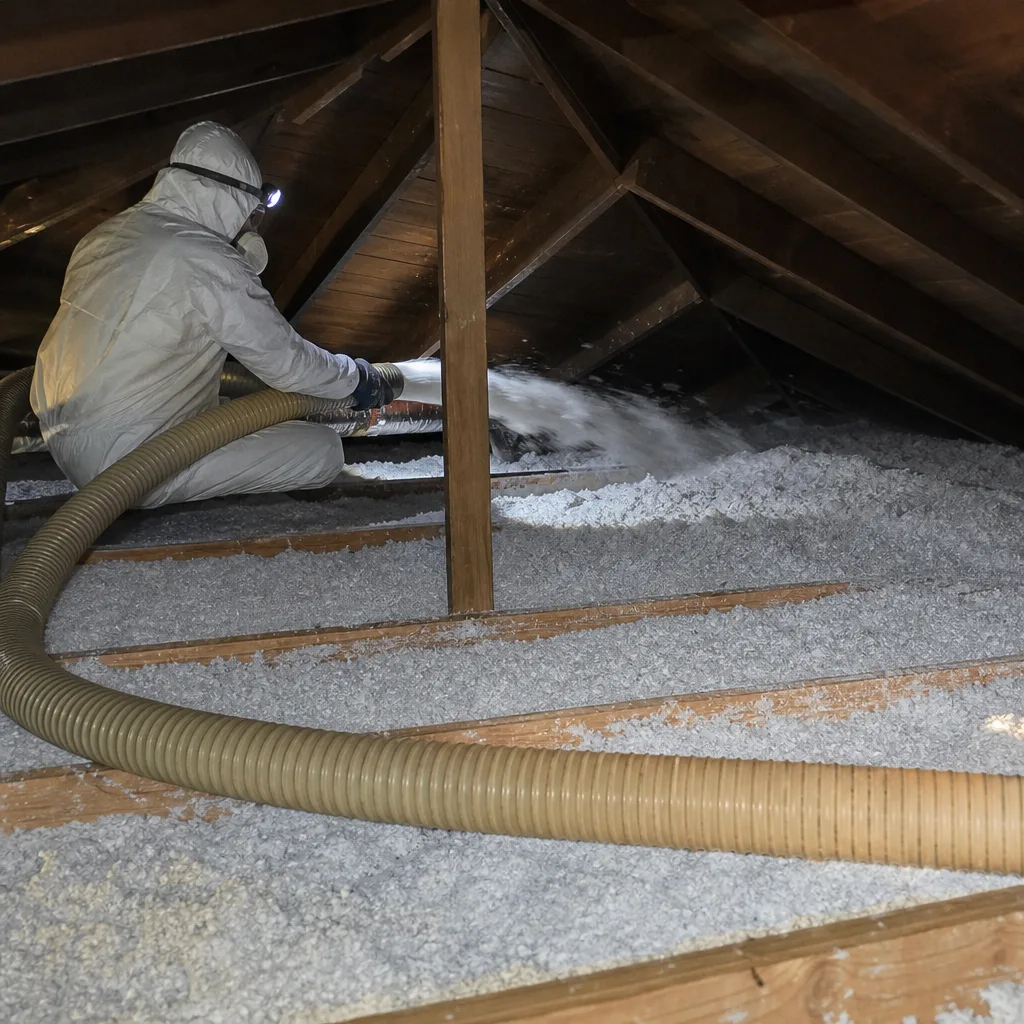
- What a Professional Install Day Should Look Like
- Three Interview Questions That Separate Specialists from Handymen
- Common Mistakes to Avoid
- When to Call a Professional
- Frequently Asked Questions
- The Bottom Line
How to Check a Contractor’s License in 30 Seconds
The single most useful thing you can do before hiring any insulation contractor in San Jose is a CSLB license lookup. It takes about half a minute, it’s free, and it immediately filters out the operators who are hoping you won’t ask. Here’s the exact process:
- Go to CSLB.ca.gov and click “Check a License” on the homepage.
- Enter the contractor’s name or license number. If you only have a business name, use the “Business Name” search field. Note: many contractors operate under a DBA (Doing Business As). The license may be under a different name than the one on the truck.
- Verify the license status says “Active.” Anything else – expired, suspended, revoked, cancelled – means the contractor cannot legally work in California.
- Check the classification. This is the part most people skip. You’ll see a two or three letter code next to the license number. For insulation work, you want C-2 (Insulation and Acoustical) or B (General Building). A C-33 (Painting and Decorating) or C-36 (Plumbing) license does not authorize insulation installation.
- Look at the bond and insurance tabs. The CSLB requires a $25,000 contractor bond. If the bond shows “Cancelled,” that’s an active disciplinary issue. Check workers’ compensation insurance status too, especially if more than one person will be on your property.
- Click “Disciplinary Actions.” If the contractor has complaints or citations, they’ll appear here. Not every complaint is disqualifying, but patterns are.
San Jose-specific note: the CSLB’s San Jose field office covers Santa Clara County and maintains a local complaint desk at 100 Paseo de San Antonio. You can also call (800) 321-CSLB during business hours to speak with someone about a contractor’s history. In our experience serving San Jose homeowners since 2003, the contractors with something to hide almost never pass the 30-second check.
C-2 vs. B License: Why the Classification Matters
California splits insulation work into a strange gray zone, and it’s worth understanding before you sign anything. Insulation jobs under $500 (combined labor and materials) require no contractor license at all. This is exactly why some San Jose operators quote just below that number, and why “cheap” blow-in jobs are sometimes an indicator of no license rather than a good deal. See our Insulation Cost Breakdown: The San Jose Homeowner’s Reference for 2026 for typical pricing ranges.
For jobs over $500, the relevant classifications are:
- C-2 Insulation and Acoustical Contractor: This license authorizes installation of insulation materials for thermal and acoustical purposes in buildings. This is the specific, purpose-built license for the trade. A C-2 holder has passed an exam covering insulation materials, application methods, and building codes related to insulation.
- B General Building Contractor: A B license authorizes work on two or more unrelated trades as part of a larger project. If your insulation is part of a broader remodel – say, you’re doing drywall replacement and then adding insulation behind it – a B license holder can legally perform the insulation work as part of that scope.
- C-33 Painting and Decorating Contractor: Some painting contractors offer “insulation services” on the side. A C-33 license does not cover insulation installation, even if the contractor tells you it does. This is one of the most common misclassifications we see in San Jose.
What about spray foam specifically? Under California law, spray foam insulation installation over $500 requires a C-2 license. It’s not a gray area, despite what some contractors suggest. Spray foam involves chemical mixing ratios, off-gassing considerations, and building envelope interactions that the C-2 exam covers and the C-33 exam does not.
The practical takeaway: if the job is insulation-only and over $500, you want a C-2 license. If it’s part of a larger remodel, a B license is acceptable. Anything else and you’re hiring someone who legally cannot do the work. Learn more about attic insulation in San Jose, including material options and R-value targets for this climate zone.
The Five Things Every Written Quote Must Include
Verbal quotes for jobs over $500 are legally unenforceable in California. If a contractor gives you a number over the phone and says “trust me, that’s the price,” you have no legal recourse if the bill doubles. Here’s what a legitimate written quote for insulation work in San Jose must include:
- Material brand and product name. “Cellulose” or “fiberglass” is not enough. The quote should say which brand and product line – for example, Owens Corning ProPink L77 or Johns Manville Climate Pro. Different products within the same category have different performance characteristics, and the brand name is what you’ll verify against the bags they bring on install day. We carry materials from Owens Corning, Johns Manville, Knauf, and Rockwool, among others, and we match the material to the job rather than running whatever is on the truck.
- R-value being installed. R-value is the number that measures how well insulation slows heat from moving through your ceiling. A quote that says “add insulation” without specifying the target R-value is incomplete. San Jose sits in climate zone 3, where code-compliant attic insulation ranges from R-30 to R-60 depending on the home’s age and existing materials.
- Square footage. The quote should state how many square feet of attic or wall area is covered. This is the number that lets you compare quotes apples-to-apples. If two contractors give you wildly different square footage numbers, one of them didn’t measure.
- Price before and after any utility rebate. The quote should show the full price, then separately show any PG&E or Energy Upgrade California rebate that applies. A contractor who quotes only the “after-rebate” price is trying to make the number look smaller than it is. You should always see both numbers.
- Start and completion dates. A written date range for when work begins and when it finishes. “Sometime next week” is not a start date. “Two days after material arrives” is not a completion date. Insulation jobs typically take one to two days for a standard San Jose attic.
A real written quote protects you under California Home Improvement Contract law (Business & Professions Code 7159). If the work is not performed to the written scope, you have standing. Without a written quote, you’re in a he-said-she-said situation with no legal leg.
How PG&E Rebates Actually Work (and Why Vague Contractors Are a Red Flag)
PG&E’s Energy Upgrade California program offers rebates for insulation work that meets specific technical requirements. The rebate isn’t automatic, and it isn’t applied at the point of sale. A contractor has to participate in the program, have the work verified, and submit documentation. This matters when you’re hiring because a contractor’s familiarity with the program tells you a lot about their depth of experience.
Here’s how the process works in a typical San Jose attic job:
- The contractor assesses your existing insulation depth and R-value. If your attic currently has R-11 and you’re upgrading to R-38 or above, you likely qualify for a rebate.
- The contractor submits rebate documentation before work begins. The rebate is tied to the work order and the specific material installed. It can’t be applied after the fact or retroactively.
- Work is completed and verified. PG&E may send a third-party verifier to inspect the installed insulation depth. The rebate is paid only after verification.
- The rebate arrives as a check or credit, typically 8 to 12 weeks after completion. It does not come off the price at the time of install unless the contractor has an approved financing or rebate-assignment arrangement.
Here’s the red flag test: ask the contractor “Which PG&E rebate program will you apply for on this job?” A contractor who answers “oh, we’ll look into rebates after the install” or “we don’t really do rebates” is signaling they lack program familiarity. A contractor who can name the specific program – Energy Upgrade California or PG&E’s Home Insulation Rebate – and walk you through the documentation is someone who has done this before.
San Jose context: PG&E has run regional rebate changes in Santa Clara County over the last few years. A contractor who’s current on the program will know what’s active right now, not what was active in 2021. If they’re vague, that’s not a good sign. The good news: Laurel Attic Insulation handles rebate documentation as part of every eligible attic insulation job in San Jose, and we write it into the quote so you see what you’ll receive before you sign.
What a Professional Install Day Should Look Like
You shouldn’t have to guess whether your insulation job was done correctly. The day-of process should leave you with documented evidence of what happened, not just a bill. If you’re unsure whether your home needs work, read our Insulation Warning Signs: A San Jose Homeowner’s Reference Guide. Here’s what accountability looks like in practice:
- Pre-job photo documentation. Before anything starts, someone should photograph the attic as it exists. This records the starting R-value, any existing issues (rodent damage, water stains, missing insulation), and the condition of the space. If you don’t have a “before” photo, you can’t prove what was actually added.
- Sealed work area. The staircase or attic hatch area should be sealed off with plastic or zippered barriers while work is in progress. This keeps fiberglass dust and cellulose particles out of your living space. If the installers are just running up and down your hallway with loose material on their boots, that’s a corner being cut.
- Air sealing before insulation. This is the step that separates professionals from amateurs. Before new insulation goes in, the installers should seal the gaps: top plates, around can lights, plumbing penetrations, bath fan housings. Insulation slows heat transfer. Air sealing stops air movement. They’re different problems, and doing insulation without air sealing is like wearing a down jacket with the zipper open. A professional crew does both.
- Material verification. You should be able to see the bags or canisters of material before they’re installed. The brand and product name on the bag should match what was written on your quote. If the quote said Rockwool and the bags say something else, stop the job and ask why.
- Written sign-off on depth achieved. When the job is done, someone should measure and document the final insulation depth in inches. This converts to the R-value you were quoted. You should receive this in writing, with photos. If the final measurement doesn’t match the quoted R-value, you should have a written process for how that gets resolved – insulation removal and re-installation is sometimes required, and you shouldn’t have to pay for someone else’s miss.
In our experience, the difference between a good insulation job and a bad one is rarely visible from the living room. You can’t see the air sealing, you can’t see the depth variance. That’s why photo documentation matters, and why we built the Relay Visibility Guarantee around it: live arrival tracking, before-and-after photos, and a written price before anything starts. The documentation exists because the work is invisible.
Three Interview Questions That Separate Specialists from Handymen
A general contractor or handyman can technically install insulation under a B license if it’s part of a broader project. But an insulation specialist should be able to answer three questions instantly, without hedging. Here’s what to ask, and what a good answer sounds like:
- “What brand of material will you use, and can I see the spec sheet?” A specialist answers this immediately – “Owens Corning ProPink L77 for the fiberglass option, or Rockwool ComfortBatt if you want mineral wool” – and can show you the product data sheet with the R-value per inch, fire rating, and installation requirements. A handyman says something like “whatever the supply house has” or “the good stuff, you know, the pink one.” If they can’t name a brand, they don’t know insulation.
- “How do you handle air sealing before you install?” This is the question that separates someone who understands building science from someone who just blows material into an attic. A specialist will talk about sealing top plates, around recessed lights, and around bath fan housings before insulation goes in. They’ll mention that air sealing is a separate step, not an afterthought. Someone who says “oh, the insulation itself seals the gaps” does not understand how air movement works. Insulation is not an air barrier.
- “What’s your process if the R-value test after install doesn’t match what you quoted?” This one gets the nervous laugh out of the handyman because they’ve never thought about it. A specialist has a defined process: they measure final depth with a depth gauge, they document it, and if the number is short, they add material until it matches. They have a written guarantee that covers this. Our 365-Day Done Right Promise exists exactly for this scenario – if it’s not done right, we make it right, in writing, free of charge.
We’ve heard contractors in San Jose answer question three with “well, it’ll be fine, we’ve been doing this for years.” That’s not an answer. A real specialist can name the process.
Common Mistakes to Avoid
- Hiring a contractor without a C-2 license for insulation-only work. If the job is over $500, it requires a C-2 classification. A C-33 painting license does not cover insulation, and a contractor who tells you otherwise is misrepresenting their legal authority. Check CSLB.ca.gov before you sign.
- Getting only one quote. You should get at least three written quotes from San Jose insulation contractors. The spread will tell you what’s market rate and what’s either suspiciously cheap or inflated. Never accept a verbal quote for any job over $500 – it’s legally unenforceable in California.
- Signing a contract that doesn’t name the material. “Blown-in insulation” is a category, not a material. Your contract should name the specific brand and product. Generic language is how contractors install whatever is cheapest that week.
- Skipping the air sealing conversation. The single biggest mistake San Jose homeowners make is treating insulation and air sealing as the same thing. They’re not. Insulation slows conductive heat transfer. Air sealing stops convective airflow. You need both done correctly or your energy bill won’t match the R-value on paper.
- Chasing the lowest bid without asking why it’s low. Insulation costs are mostly materials and labor. A bid that’s 40% below the other two quotes isn’t a bargain – it’s a signal that something is being cut: material quality, air sealing, worker classification, or license compliance. Ask the cheap bidder what brand and R-value they’re quoting before you get excited.
- Accepting a rebate promise rather than a rebate line item. “You’ll get a rebate” is not the same as “the PG&E Home Insulation Rebate at $0.30 per square foot will be itemized on your invoice as a separate credit.” The first is a sales line. The second is a concrete, checkable fact.
- Not checking workers’ compensation coverage. If an uninsured worker falls through your ceiling in San Jose, your homeowners insurance can be on the hook. The CSLB license lookup shows workers’ comp status. A C-2 license without workers’ comp coverage means someone is cutting costs at your risk.
When to Call a Professional
Some San Jose homeowners are capable of adding a few bags of fiberglass to an attic. But there are clear cases where professional help is the only responsible choice. If your attic has failed insulation – mold, rodent damage, or water-stained batts – removal requires respiratory protection, containment protocols, and proper disposal. If you’re considering spray foam, the two-part chemical mix ratio is not a DIY project; improper installation can cause off-gassing and adhesion failures that cost more to fix than the original install. If your home was built before 1990 in San Jose, the insulation may contain vermiculite, and disturbing it without testing is a known health risk. If you’re dealing with air sealing around recessed lights, know that old can lights run hot – covering them with the wrong material is a fire hazard. We recommend a trained professional for any of these. Laurel Attic Insulation San Jose offers free estimates throughout San Jose – call (669) 333-7274 and we’ll walk through what makes sense for your attic.
Frequently Asked Questions
Most attic insulation jobs in San Jose run $900 to $2,400 depending on square footage, material choice, and the R-value target. Smaller attics with a standard R-38 fiberglass blow-in job are on the lower end, while larger attics with spray foam or mineral wool upgrades fall higher. Call (669) 333-7274 for a free written estimate for your specific attic.
For insulation jobs over $500 combined labor and materials in California, yes – and the correct license classification is C-2 (Insulation and Acoustical), or a B (General Building) license if the insulation is part of a larger multi-trade remodel. Jobs under $500 require no license, which is why some San Jose contractors deliberately quote just below that threshold. For full details on requirements, see Insulation Permits, Codes & Inspections in CA: What You Need to Know.
San Jose sits in California Climate Zone 3, where current code-compliant attic insulation ranges from R-30 to R-60 depending on the home’s age, existing materials, and whether you’re doing a full attic re-insulate or a top-off. Most older San Jose homes built before 1980 have R-19 or less and can benefit significantly from an upgrade to R-38 or R-44.
Spray foam insulation in San Jose runs roughly 2 to 3 times the cost of fiberglass or cellulose per square foot, but it creates an air seal that fiberglass alone cannot match. For San Jose’s dry, hot summers, spray foam in a roof deck or wall cavity can make a measurable difference in cooling bills. The key is hiring a contractor with C-2 license experience specific to spray foam, since the two-part chemical application is unforgiving of mistakes.
A standard attic insulation job in a San Jose home takes one to two days, including air sealing and final depth measurement. Insulation removal plus replacement takes longer – typically two to three days – depending on attic size and the condition of the existing material. Call (669) 333-7274 for a time estimate on your project.
Yes, PG&E and Energy Upgrade California offer insulation rebates for qualifying San Jose homes, typically $0.15 to $0.35 per square foot depending on the program and the R-value achieved. The rebate is applied through a participating contractor and paid after verification, not at the point of sale. Ask your contractor to name the specific program before you sign – familiarity with the process is a real signal of experience.
The Bottom Line
Hiring an insulation contractor in San Jose comes down to three non-negotiables: a C-2 or B license verified at CSLB.ca.gov, a written quote that names the brand, R-value, square footage, and line-item price, and an air sealing process that gets done before insulation goes in. Skip any of those and you’re buying a guess. Get all three and the job is almost impossible to screw up. If you’d like a free written estimate with no pressure and no vague promises, call (669) 333-7274. A live person answers. We’ll give you a written price in your hand before anything starts – that’s the spray foam insulation or attic job done the Laurel way.
Written by Chase Whitaker, Owner at Laurel Attic Insulation San Jose, serving San Jose since 2003.