
Johns Manville Crawl Space Encapsulation: The San Jose Owner’s Guide
If you’re wondering whether Johns Manville crawl space encapsulation can be repaired or replaced in San Jose without ripping out your entire under-floor system, the answer is yes in most cases. We stock Johns Manville-compatible vapor barriers, liner tapes, and seam sealants on our trucks, and a typical encapsulation repair or section replacement in San Jose runs between $1,800 and $4,600 depending on square footage and how far the existing liner has failed. Most San Jose homeowners call us after noticing musty smells drifting up through floorboards, higher humidity on the first floor, or a vapor barrier that’s torn, sagging, or peeling away from foundation walls.
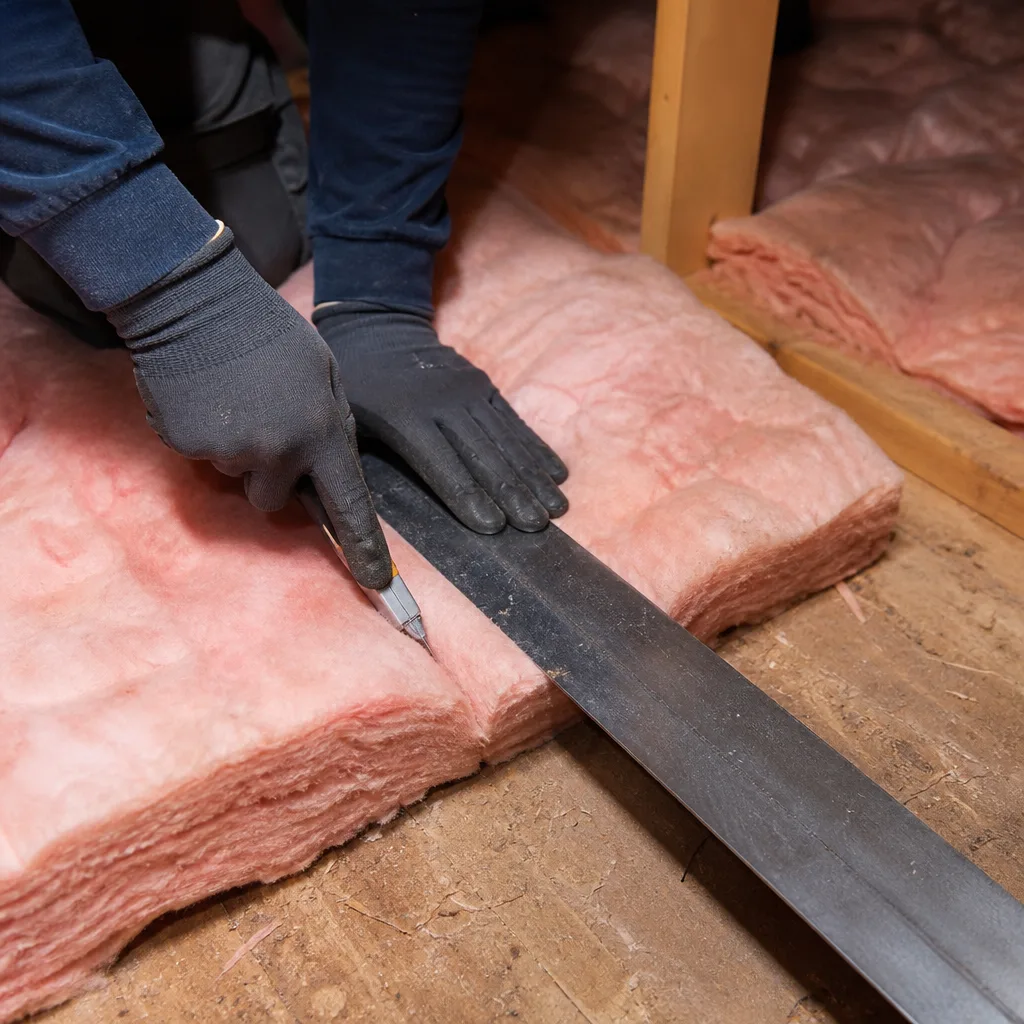
Here’s the honest picture: John Manville makes solid encapsulation liner material, but the failure usually isn’t the liner itself. It’s the installation details that give out first – seam tape losing adhesion in our damp winters, mechanical fasteners backing out of older concrete, or a liner that was never properly mechanically attached to piers in the first place. Chase Whitaker has seen this pattern repeat across San Jose crawl spaces for years, and it’s almost always fixable without a full re-do.
What Johns Manville Crawl Space Encapsulation Actually Is
Crawl space encapsulation means lining the floor and walls of your under-home space with a heavy vapor barrier, then sealing the seams so ground moisture can’t migrate up into your house. Johns Manville sells this as part of their broader building products line – specifically their reinforced poly vapor barrier systems, which come in varying thicknesses measured in mils (thousandths of an inch). The most common Johns Manville barrier we see in San Jose homes is 10-mil or 12-mil reinforced poly, though some older installs used 6-mil which is far more prone to tearing.
At Laurel Attic Insulation San Jose, we’re an independent service provider – we’re not affiliated with Johns Manville, but we work with their materials alongside brands like Reflectix and Owens Corning because the product itself is legitimate. What matters more than the brand printed on the liner is the mil thickness, the seam treatment, and whether the installer actually attached the liner to the foundation walls instead of just draping it over the dirt. We explain all of this before quoting, because the last thing you need is a second opinion that only tells you what the first guy already said.
Which Johns Manville Models This Applies To
Johns Manville doesn’t label their crawl space liners with “model numbers” the way a furnace manufacturer would. You’ll typically find a product code on the roll or the face of the liner itself – common ones we match against include their 10-mil and 12-mil reinforced poly sheeting, often sold through building supply channels rather than direct to homeowners. If you can’t find a label, grab a tape measure: the mil thickness is the quickest tell. A 6-mil liner feels like a heavy trash bag and tears under moderate tension. A 12-mil reinforced liner has a fabric-like scrim grid you can see when you hold it up to light.
Here’s a San Jose-specific reality: if your home was built before 2010 and the crawl space was encapsulated by the original builder, there’s a good chance you have 6-mil poly that’s now brittle and failing. If it was done as a retrofit, the barrier could be anything from 10-mil to 20-mil. The OEM-vs-aftermarket question doesn’t really apply to bulk vapor barrier the way it does to, say, an HVAC control board. What matters is the spec match: same or greater mil thickness, a reinforced scrim for tear resistance, and a seam tape rated for high-moisture concrete contact. We stock Johns Manville-compatible 12-mil liner on the truck for San Jose jobs, plus butyl and acrylic seam tapes that hold up to the humidity swings we get between the dry season and our wet winters.
One more compatibility gotcha: some San Jose crawl spaces were encapsulated with a white or reflective product. That’s a different animal – often a Reflectix-style radiant barrier, which does almost nothing for moisture control. If you have reflective foil under your house thinking it’s a vapor barrier, that’s a common misconception, and we can tell you within about one minute of looking at it what you actually have.
Signs Your Johns Manville Crawl Space Encapsulation Is Failing
- Musty or damp smell on the first floor. This is the number one call we get. When the liner tears or seams peel, ground moisture moves up into the floor assembly. The smell is usually strongest in the morning before the house airs out.
- Visible liner that’s sagging or pooling water. A properly installed vapor barrier should be relatively taut, or at least lying flat on the dirt. If sections are sagging from piers or holding standing water, fasteners have failed or condensation is forming on top of the liner.
- Peeling seams or loose tape. Johns Manville liners require seam tape that sticks to poly in damp conditions. When that tape dries out, cracks, or peels at the edges, the encapsulation is no longer continuous – which means it’s no longer doing its job.
- Higher indoor humidity on the main floor. If you run a dehumidifier and it’s pulling more water than it used to, or your wood floors feel slightly tacky or cupped, the crawl space below is probably letting moisture through somewhere.
- Foundation wall liner has detached. Walk the perimeter of your crawl space (or have someone who can). If the liner has pulled away from the concrete walls, especially near the top few inches, that’s a prime entry point for both moisture and soil gases.
Replacement Cost & What’s Included
In San Jose, a partial Johns Manville crawl space encapsulation repair – replacing a section of torn liner, re-taping seams, and re-fastening loose areas – typically runs between $1,800 and $3,200. A full encapsulation replacement for a 1,000 to 1,500 square foot crawl space generally falls between $3,400 and $4,600, depending on access, pier count, and whether the old liner needs to be cut out and hauled away. These aren’t vague ballparks; they’re the actual ranges we write into San Jose quotes every week.
Every job we do includes the written price before work starts, and that price covers parts and labor together – no line-item guessing games after the fact. You get a written 365-Day Done Right Promise: if the liner, seams, or fasteners we install fail within a year, we return and make it right at no charge. That’s backed by a free second visit if the repair doesn’t hold. You’ll also get before-and-after photos of the crawl space so you can see exactly what we did, even if you never plan to go down there yourself.
DIY or Call Us?
You can safely check a few things yourself: look for standing water, obvious tears in the liner near the access hatch, and whether the liner has pulled away from the foundation walls near the perimeter. That’s information that helps you describe the problem when you call. What you shouldn’t DIY is the repair itself. Crawl spaces in San Jose can have standing water, exposed electrical wiring, rodent droppings, and in some older homes, asbestos wrap on ductwork. Tearing out old liner without a respirator and proper inspection can stir up contaminants you don’t want in your lungs. There’s no spring-tension danger here like a garage door, but confined-space work with moisture, mold, and old building materials is its own risk category.
If you want to know whether it’s a quick section patch or a full re-liner, call (669) 333-7274. One of our crew can get eyes on it and tell you straight, with a written price, before anything gets touched.
Whether to Repair or Replace Your Johns Manville Crawl Space Encapsulation
If the liner is newer – installed within the last five years – and the failure is confined to seams or fasteners, repair is usually the smart money. Re-taping seams and re-fastening to the foundation is a $1,000 to $2,000 fix in most San Jose crawl spaces, and it restores the encapsulation to full function. If the liner is 6-mil, brittle, torn in multiple places, or older than the last decade, replacement costs only a bit more than extensive repair, and you get a fresh 12-mil liner with a full-year written guarantee. The tipping point is usually surface area: once more than 30 percent of the liner has failed, patching becomes a game of whack-a-mole. Insulation isn’t exciting – but your next utility bill can be.
FAQs
A properly installed 10-mil or 12-mil Johns Manville-compatible liner should last 15 to 20 years in a San Jose crawl space, though seam tape often needs re-adhesion around the 7- to 10-year mark due to our seasonal moisture swings. For a specific look at your crawl space, call (669) 333-7274 and we’ll tell you honestly what you’re working with.
Yes, in many cases a torn or seam-failed Johns Manville liner can be repaired with new seam tape, extra liner patches, and re-fastening – it’s usually a same-day job. Give us a call at (669) 333-7274 and we’ll help you figure out if yours falls into repair territory.
Most San Jose crawl space encapsulation repairs can be scheduled within a few days, and smaller seam-tape fixes are often doable same-week. Call (669) 333-7274 and you’ll reach a live person, not a voicemail tree, 24/7.
Yes, our trucks carry 12-mil reinforced liner, butyl and acrylic seam tapes, and mechanical fasteners sized for San Jose’s typical concrete and wood pier foundations. That means most repair jobs are completed in one visit with no parts-ordering delay.
Written by Chase Whitaker, Owner, Laurel Attic Insulation San Jose at Laurel Attic Insulation San Jose, serving San Jose and nearby areas.