
Rockwool Attic Air Sealing: The San Jose Owner’s Guide
Rockwool attic air sealing in San Jose typically costs between $1,200 and $2,800 installed, depending on attic size, access difficulty, and how much of the existing Rockwool batts need to be lifted and re-set. We stock Rockwool-compatible air sealing materials on our trucks and can usually complete the job same-day or next-day. Most homeowners discover their air sealing has failed when they notice a room that won’t hold temperature, a spike in their PG&E bill, or dust collecting faster than it should along ceiling edges.
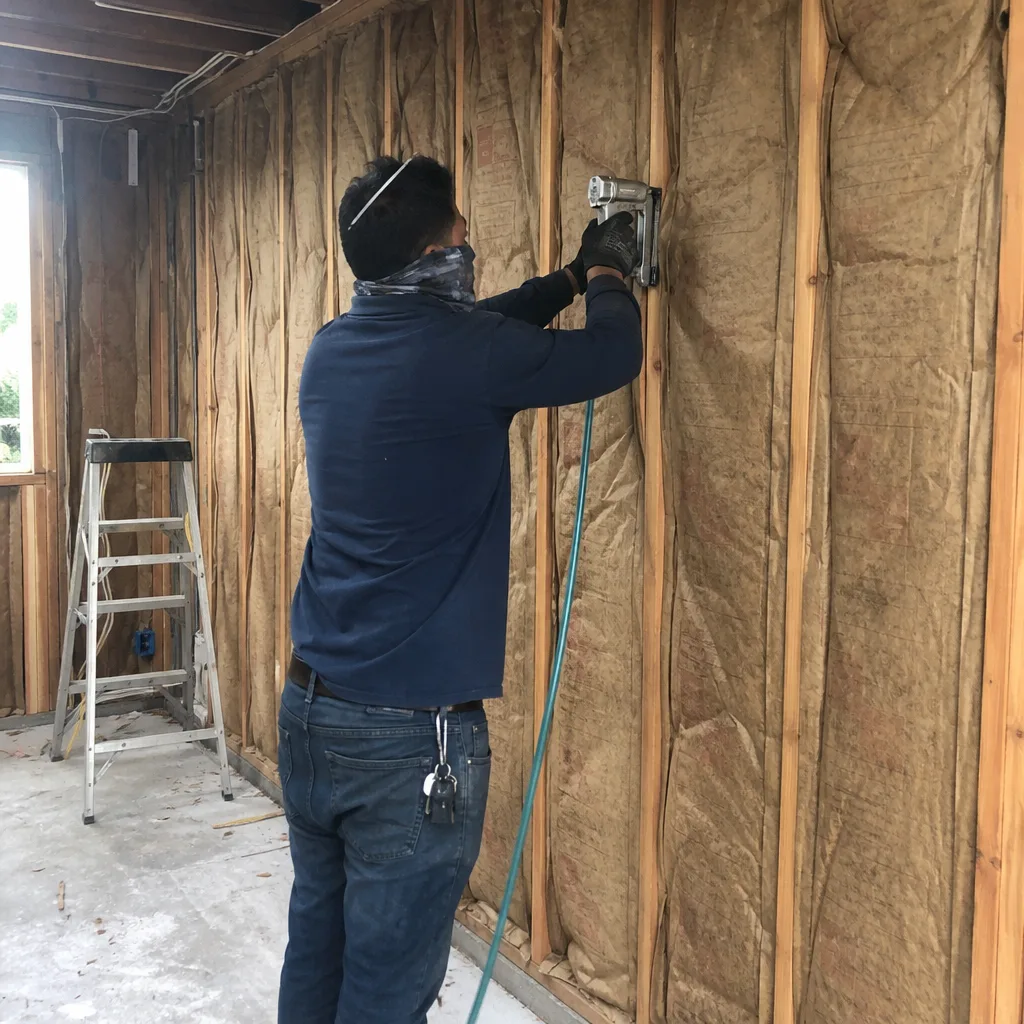
Here’s the thing about Rockwool specifically: the batts do a great job of slowing heat, but they don’t stop air movement. Air sealing is the separate layer of work that closes the gaps around plumbing vents, electrical penetrations, recessed lights, and the attic hatch. When that seal fails, conditioned air leaks out and your Rockwool ends up filtering dirty attic air rather than doing its thermal job. It’s a common failure point in San Jose homes, especially in older neighborhoods where the original sealing was done decades ago or skipped entirely.
Key Takeaways:
- Installed Rockwool attic air sealing in San Jose typically runs $1,200 to $2,800.
- We stock the sealing materials on our trucks and can usually start same-day.
- Air sealing failure is most visible as uneven room temperatures, high energy bills, and dust streaks on ceiling drywall.
- Every job includes a written price before work starts and a written 365-day guarantee.
Which Rockwool Models This Applies To
Rockwool attic air sealing isn’t tied to a specific batt model in the way a furnace part matches a serial number. It applies to any attic insulated with Rockwool products, including the most common lines we see in San Jose homes: Rockwool Comfortbatt, Safe’n’Sound, and the older Roxul AFB and Comfortbatt R-series that pre-date the Rockwool rebrand. If your Rockwool has a brownish-gold fibrous look with a slightly dense, rigid feel, it’s almost certainly one of these lines.
The part that matters is the sealant system, not the batt model. We use fire-rated can foam rated for the specific gap sizes around San Jose building code requirements, aluminum tape for duct boots, and rigid foam board for larger openings like the attic hatch or whole-house fan housings. The compatibility gotcha most owners don’t know: Rockwool’s density means you can’t just spray foam over the top of the batt and call it sealed. The foam has to go against the drywall or framing below the batt, or the air path just moves around it. That’s the difference between a seal that lasts and one that looks sealed in a photo but does nothing.
On the OEM vs. aftermarket question: Rockwool doesn’t manufacture sealant products. The materials we use come from fire-rated, code-tested brands like Great Stuff Pro, Sika, and Owens Corning foam sealants, matched to the specific gap type. There’s no “genuine Rockwool caulk” to chase, so the real decision is whether the person doing the work knows where air actually leaks in a San Jose attic. That’s the part worth paying for.
Laurel Attic Insulation San Jose is an independent service provider. We’re not affiliated with Rockwool, and we don’t claim to be. We’re the crew that fixes what’s around the Rockwool.
Signs Your Rockwool Attic Air Sealing Is Failing
Most of the time, you won’t see the failure directly unless you go up there. What you see are the symptoms in your living space. Here are the five most common ones we encounter in San Jose attics:
- Rooms that run 4 to 6 degrees different from the rest of the house. The attic’s air sealing has gaps in that part of the thermal boundary, so the conditioned air escapes directly into the attic. The Rockwool is still doing its job, but the air movement around it defeats the purpose.
- Dust streaks on ceiling drywall along joist lines. This is the classic tell. Dirty attic air gets pulled through small gaps, and the drywall acts like a filter. The dust pattern shows exactly where the seal has failed.
- A PG&E bill that climbs without a matching change in usage. When the seal goes, your HVAC system runs longer cycles to hold the set temperature. In San Jose’s summer heat, that adds up fast.
- The attic hatch feels warm to the touch on a hot day. An unsealed or poorly weatherstripped hatch is the single most common air leak in any attic, and it’s usually the first thing we check on a Rockwool job.
- You hear outside noise more than you used to. Rockwool is known for its sound control, but air gaps carry sound through the ceiling. If street noise got louder, air sealing is part of the answer.
Any one of these symptoms is worth a look. Three or more means the seal has failed in multiple places and you’re paying to condition the outside air.
Replacement Cost & What’s Included
In the San Jose market, most Rockwool attic air sealing jobs land between $1,200 and $2,800 fully installed. That price includes the materials, the labor to lift and re-set existing Rockwool batts, sealing the penetration points, and cleaning up. The range comes down to specific factors:
- Attic square footage. A 1,200-square-foot attic costs more than a 700-square-foot one because there’s more perimeter to seal.
- Access difficulty. Low-slope roofs, tight joist spacing, and attics crowded with ductwork all add labor time.
- Number of penetrations. Every plumbing vent, wire, light fixture, and duct boot is a place air leaks. Older San Jose homes often have 40 to 60 penetrations, and each one takes time to seal correctly.
- Condition of the existing Rockwool. If the batts are compressed, rodent-damaged, or water-stained, they need replacement rather than re-setting, which adds material cost.
What’s included every time: a written price before any work starts, the sealing work itself, re-installation of the existing Rockwool batts, a written 365-Day Done Right Promise, and a free second visit if the repair fails within that year. You’ll also get before-and-after photos through the Relay Visibility Guarantee so you can see exactly what was sealed and verify the work without climbing a ladder.
The price you’re quoted is the price you pay. No door-step surprises, no “while we’re in there” upcharges. Where most insulation contractors leave homeowners guessing, we put everything in writing in your hand before a single can of foam is opened.
DIY or Call Us?
There’s a real split here, and Chase Whitaker will tell you the same thing on the phone: some parts of this job are safe and reasonable for a homeowner, and some are not.
You can safely check the attic hatch weatherstripping, look for obvious daylight around plumbing vents with a flashlight, and identify dust streaks on your ceiling drywall. Those are diagnostic steps any homeowner can do without risk. What goes wrong with DIY is the sealing itself. Spray foam in a tight attic space requires a respirator to protect against isocyanates, which are the active chemicals. Working around electrical penetrations means understanding what’s safe to foam against and what isn’t. And the Rockwool itself: moving batts without proper gloves and eye protection means fiberglass-like irritation that can take days to resolve. One misapplied can of foam around a recessed light fixture can create a fire hazard. That’s not scare talk; it’s what we fix after DIY attempts.
If you want to identify the problem yourself, go ahead. If you want it sealed correctly with a written guarantee, call (669) 333-7274. Estimates are free, and a live person answers 24/7.
FAQs
A properly done air sealing job should last 15 to 20 years in a San Jose attic, with the main variables being foam degradation from heat cycling and any future work in the attic that disturbs the seal. Our 365-Day Done Right Promise covers workmanship for a full year, and if it fails in that window, the second visit is free. Call (669) 333-7274 for an exact assessment of your attic.
Yes, individual gaps and penetrations can be re-sealed without redoing the entire attic if the failure is localized. If the original sealing was done with cheap materials or missed large sections, a full re-seal usually costs less in the long run than chasing leaks one by one. We’ll tell you which situation you have after looking at the attic, no obligation.
Most Rockwool attic air sealing jobs in San Jose are completed in four to eight hours, depending on attic size and the number of penetrations. Same-day or next-day scheduling is common, and you’ll get a live arrival time through the Relay Visibility Guarantee so you’re not waiting on a vague window.
We stock everything on our trucks, including fire-rated foam, aluminum tape, rigid foam board, and the Rockwool batts themselves if replacement is needed. We also carry materials from other manufacturers, including Reflectix, so the right product gets matched to the job, not to whatever is on the truck. You don’t order anything yourself; we show up ready to work.
Insulation isn’t exciting, but your next utility bill can be. If your Rockwool attic isn’t holding the line on your energy costs, call Laurel Attic Insulation San Jose at (669) 333-7274 for a free estimate and a straight answer on whether air sealing is the fix. We’ll put the price in writing before anything starts, show you the proof when it’s done, and stand behind the work for a full year.
Written by Chase Whitaker, Owner, Laurel Attic Insulation San Jose at Laurel Attic Insulation San Jose, serving San Jose and nearby areas.