
Demilec Insulation Removal in San Jose: What to Know First
Demilec spray foam insulation removal in San Jose typically runs $1,800 to $5,600 depending on square footage, foam thickness, and whether the foam is open-cell or closed-cell. Most full removal jobs we handle take one to three days from start to finish, and we work as an independent Demilec service provider – which means we’re not tied to the manufacturer’s timelines or authorization requirements. If your Demilec foam has failed, degraded, or was applied incorrectly, we’ll remove it completely and replace it with the right material for your home.
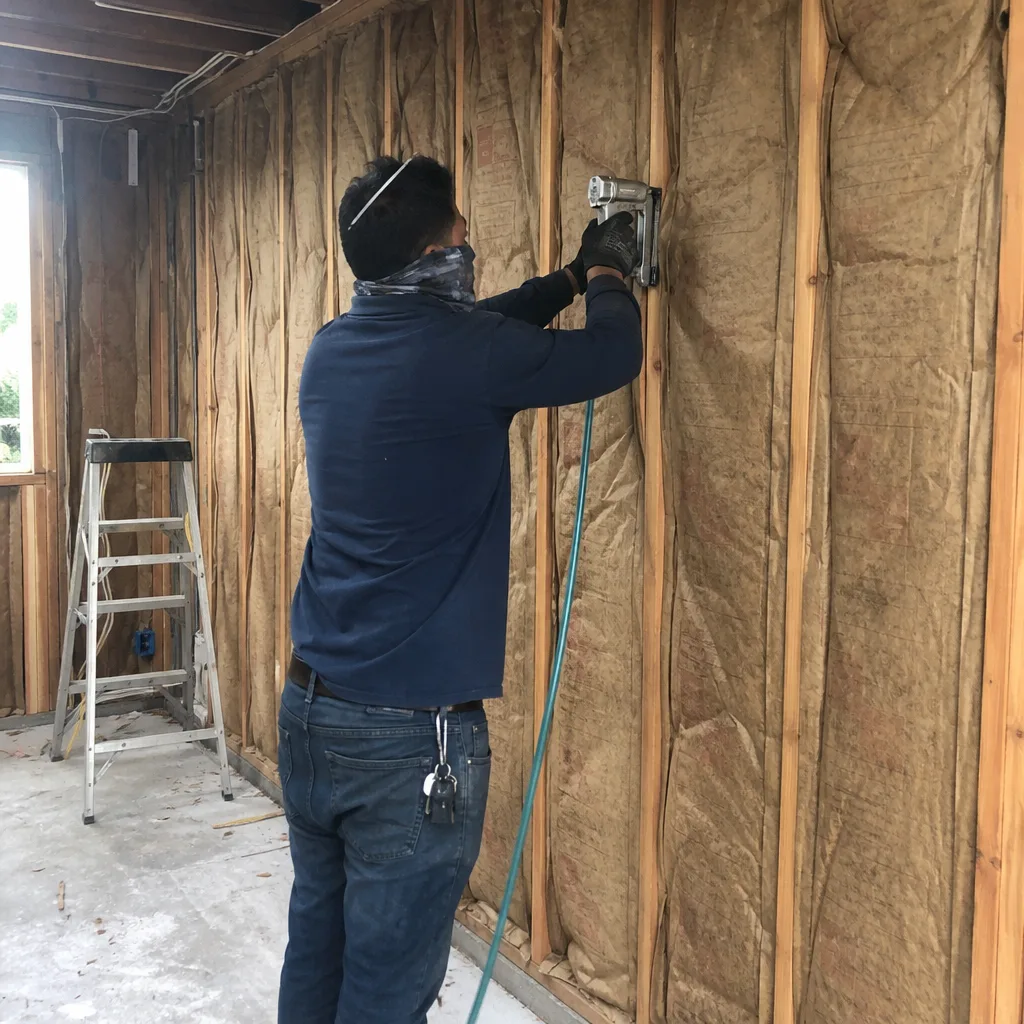
This page covers what breaks in Demilec products, what removal actually takes, and what you should expect to pay in the San Jose market. If you already know you need the work done, call (669) 333-7274 and we’ll set up a time to look at it in person.
How Demilec Products Fail – and How We Fix Them
Demilec makes solid spray foam products, but every foam line has failure patterns we see repeatedly in San Jose homes. Here’s what actually goes wrong, and what we do when we find it.
- Heatlok HFO off-ratio application. Heatlok HFO is Demilec’s closed-cell line, and when it’s sprayed off-ratio – too much iso, not enough resin – the foam never cures properly. You get a crumbly, brittle mass that flakes when you touch it. We see this in homes where a previous contractor sprayed on a cold morning or ran low on one chemical. The fix is full removal and a fresh application, because you can’t spot-repair chemically imbalanced foam.
- Sealection 500 sagging in bays. Sealection 500 is an open-cell, water-blown product. It’s a good insulator, but if it was sprayed too thick in one pass, the cells collapse under their own weight while curing. You end up with dense, shrunken foam that leaves a gap at the top of wall or ceiling cavities. That gap is a thermal bridge – heat sneaks right through. We remove the collapsed foam and rebuild the cavity properly.
- Demilec APEX and Agribalance rodent intrusion. These open-cell lines are intentionally soft, which makes them attractive to rodents in San Jose crawlspaces and attics. Once critters burrow in, the foam loses its air-sealing value and holds waste. Removal here is about contamination, not just insulation performance – we pull the soiled foam, address the entry point, and re-insulate with a material matched to the space.
- VOC off-gassing complaints tied to Heatlok Soy or older Demilec Soy formulations. If the foam never finished curing, it can release amines for months. Homeowners notice a fishy or chemical odor that gets worse on hot San Jose summer days. We’ve removed foam from homes in Willow Glen and Almaden where the smell was so persistent the owners couldn’t stay upstairs. The fix is complete removal, then re-spray with a low-VOC product once we confirm the cavity is stable.
- Water-trapping in roof deck applications. Closed-cell Demilec foam on the underside of a roof deck can mask leaks. Water gets in through a nail hole or flashing gap, travels between the foam and the plywood, and rots the deck from the inside out. By the time you see a stain on the ceiling, the plywood is usually gone. When we remove foam from roof decks in San Jose, we’re often also coordinating deck repair – which changes the scope and the price.
Our Demilec Insulation Removal Process
Removing Demilec foam isn’t like pulling out fiberglass batts. Spray foam bonds to framing, and cutting corners here means leaving residue that ruins the next application. Here’s how we handle it.
- 1
Call and site visit. You call (669) 333-7274, we schedule a free site visit at a live, trackable time. Chase or one of our senior techs inspects the foam, checks application thickness, and confirms what product you have.
- 2
Written scope and price. Before any work starts, you get a written price covering removal square footage, disposal, and any cavity prep needed. No surprises at the door. Ever.
- 3
Containment and air control. We seal off the work zone, run negative air pressure, and use fresh-air supply for the removal crew. Demilec dust is fine and gets everywhere if you don’t manage it.
- 4
Mechanical removal. We cut, scrape, and grind foam off the framing down to clean wood. On closed-cell jobs, that’s slow, deliberate work – we don’t rush it.
- 5
Debris removal and inspection. Every scrap of foam gets bagged and hauled. Then we inspect the cavity for hidden water damage, mold, or rodent activity before anything new goes in.
- 6
Re-insulation and guarantee. We install the replacement insulation matched to your space and budget – that could be a different spray foam, blown-in fiberglass, or batts. Then we document the whole job with photos you can pull up yourself. Every job carries our 365-Day Done Right Promise in writing, and if something isn’t right, we make it right.
What Demilec Insulation Removal Costs in San Jose
Removal pricing comes down to foam type, access, and square footage. Here’s what we’re quoting in San Jose right now:
| Scenario | Typical Price Range |
|---|---|
| Open-cell Demilec removal (Sealection 500, APEX) – attic floor | $1,800 – $3,200 |
| Closed-cell Demilec removal (Heatlok HFO) – walls or roof deck | $3,400 – $5,600 |
| Spot removal + cavity prep only | $600 – $1,200 |
| Full removal + re-insulation (blown-in fiberglass) | Add $900 – $2,400 depending on R-value |
What moves the price: foam thickness, how many linear feet of framing we have to clean, whether there’s water damage behind the foam, and how far debris has to be carried. In San Jose, accessible attics with standard 5.5-inch open-cell removal sit on the lower end. Roof deck and closed-cell work climbs because it’s punishing, slow labor. Every job gets a free written estimate before you commit.
Call (669) 333-7274 for an exact quote on your Demilec removal.
Why San Jose Homeowners Call Laurel Attic Insulation San Jose for Demilec Work
We’re part of the Relay Home Co. family, and we operate under the Relay Visibility Guarantee: a written price before work starts, live technician tracking on the day, and before-and-after photos of every job delivered to your phone. That’s the standard for every insulation job we do in San Jose, including Demilec removals.
Our techs know the difference between a failed Sealection 500 install and a heat-damaged Heatlok HFO deck. We carry materials from eight brands – Owens Corning, Johns Manville, Knauf, Rockwool, CertainTeed, Icynene, Demilec, and GreenFiber – plus Reflectix for radiant applications. What that means for you: we match the material to the problem instead of pushing whatever’s on the truck. And every removal carries our 365-Day Done Right Promise: if it’s not right, we make it right, in writing, for a full year. Free second visit if the repair fails. No charge, no argument.
Insulation isn’t exciting – but your next utility bill can be.
FAQs
If the existing Demilec application was done by a certified installer and it’s still within the warranty window, you should contact Demilec directly before any third-party removal work starts. In our experience, most removals involve installations that either failed early or were never covered because they weren’t applied to spec. We’re an independent service provider – we don’t have authority to file Demilec warranty claims on your behalf, but we can document the failure condition with photos before removal, which is exactly what you’ll want if you pursue a claim. Call (669) 333-7274 if you need help figuring out your warranty status.
Most residential Demilec removal jobs are scheduled within five to ten business days of your written estimate. The removal itself runs one to three days depending on scope. If you have a water leak or odor emergency, tell us when you call – we do keep capacity for urgent jobs in the San Jose area.
For localized damage – a small rodent tunnel, a plumbing leak that wrecked one bay – spot removal works and it’s far cheaper than a full job. But if the foam has off-ratio failure or cured improperly, you’re looking at full removal because the chemical problem runs through the whole application. We’ll tell you which situation you’re in during the free site visit.
Closed-cell Demilec bonded to roof decking can’t be pulled cleanly – some wood fiber comes off with the foam no matter how careful we are. What we can do is control how much damage occurs and inspect for rot underneath. In San Jose, where we get real sun exposure and thermal cycling, roof deck foam jobs often turn into a two-phase plan: removal first, then deck repair, then re-insulation. We’ll bring the scope to you in writing before anything starts.
Heatlok HFO is Demilec’s closed-cell spray foam line built around a hydrofluoroolefin blowing agent. In plain English: it’s their high-R, moisture-blocking product used on wall cavities, rim joists, and roof decks here in San Jose. The “HFO” refers to the blowing agent that expands the foam, and it replaced older hydrofluorocarbon formulations that had higher global warming potential. Call (669) 333-7274 for a free estimate on removal or replacement.
Contact Laurel Attic Insulation San Jose
If you have Demilec foam in your San Jose home that’s failing, smelling, sagging, or holding water, we’ll come look at it. No charge for the visit, no pressure, and a written price before any work starts. Chase Whitaker and the Laurel Attic Insulation San Jose crew serve San Jose and nearby communities, from Willow Glen to Almaden Valley, with the same standard on every job: written pricing, live arrival tracking, photo proof, and a 365-Day Done Right Promise in writing.
Call (669) 333-7274 today to schedule a free Demilec insulation removal estimate.
Written by Chase Whitaker, Owner, Laurel Attic Insulation San Jose at Laurel Attic Insulation San Jose, serving San Jose and nearby areas.