
GreenFiber Radiant Barrier Installation: The San Jose Owner’s Guide
GreenFiber radiant barrier installation in San Jose typically runs $1,100 to $2,800 for a full attic, depending on square footage, roof pitch, and whether we’re pairing it with new insulation. We stock GreenFiber-compatible radiant barrier material on our trucks and can usually complete the install same-day once we’ve taken measurements. Most San Jose homeowners discover a problem when their upstairs rooms run 8 to 12 degrees hotter than the rest of the house in July, or when the PG&E bill climbs even though the AC unit is only a few years old.
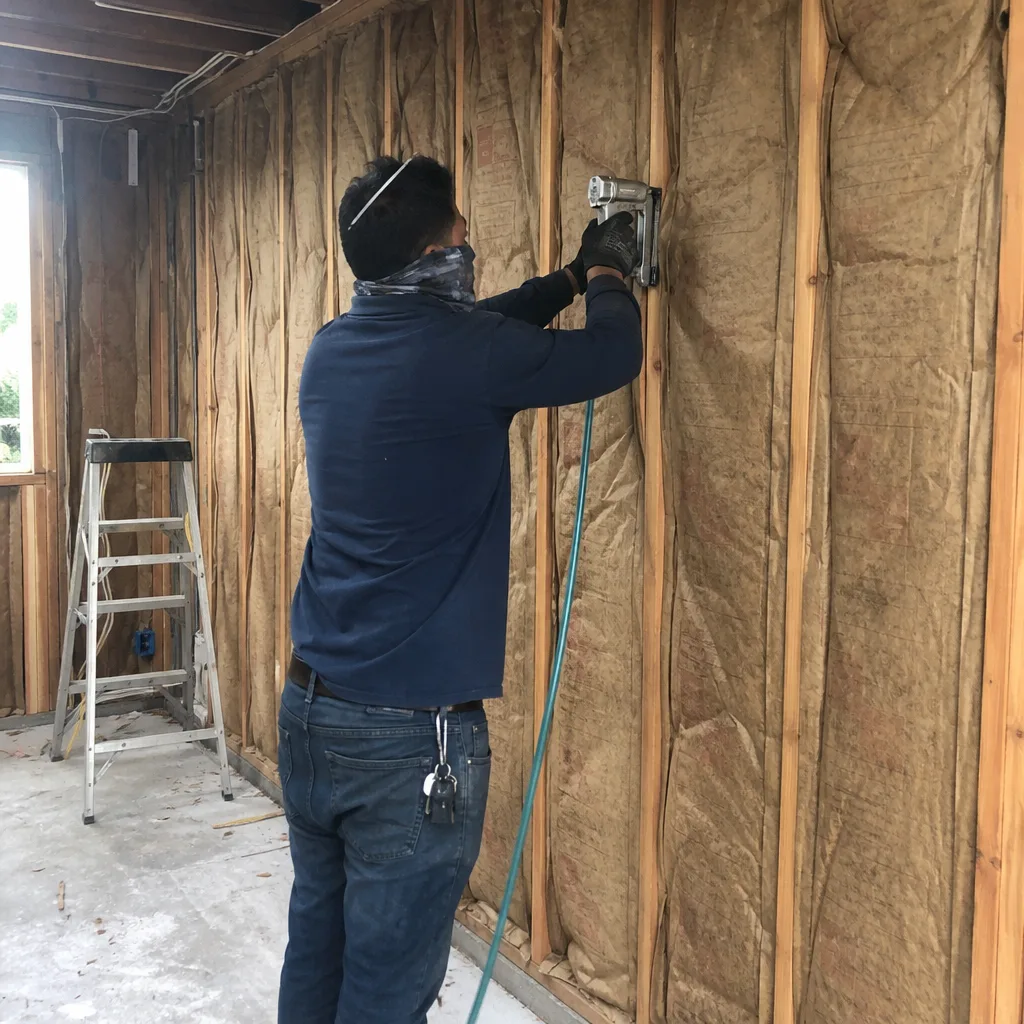
Here’s the scenario we see most: a house built in the 1990s or early 2000s had a radiant barrier installed when it was new. The foil has delaminated from the kraft paper backing, or the staples have pulled loose in the heat, and now sections of the barrier are sagging against the insulation below. That kills the reflectivity and starts trapping heat exactly where you don’t want it. We fix that. Since 2003, we’ve been doing GreenFiber radiant barrier installs across Willow Glen, Almaden Valley, Rose Garden, and the rest of the San Jose area.
One thing to know up front: Laurel Attic Insulation San Jose is an independent local insulation service, not a GreenFiber dealer or factory branch. We install and service GreenFiber products because they’re good material, but we also work with Reflectix and other radiant barrier brands when the job calls for it. Our loyalty is to the attic, not to one manufacturer’s catalog.
Which GreenFiber Models This Applies To
GreenFiber sells its radiant barrier under a few different product names, and they’re not all the same thickness or facing material. The two most common in San Jose attics are the single-sided foil (typically the RBS series, used when stapling to the underside of rafters) and the double-sided foil (the RBD series, used for horizontal installation over existing insulation in a vented attic). The double-sided version is what you want if your attic already has blown-in fiberglass or cellulose and you’re looking to cut radiant heat gain without disturbing it.
Identifying which GreenFiber barrier you have is straightforward: the single-sided product has a foil face on just one side with kraft paper on the back, while the double-sided is foil on both faces with a woven scrim in the middle. The product code is usually printed along the edge of the roll or stamped on the facing. If you can’t find it, snap a photo of the barrier from two angles and text it to us before we head out. It saves a trip and means we arrive with the right replacement on the truck.
On the OEM versus aftermarket question: GreenFiber’s barrier material is produced to a specific emissivity rating, usually 0.05 to 0.10 depending on the series. That’s the number that matters, not the brand name. A quality aftermarket barrier with the same emissivity and perforation pattern performs identically and often costs 20 to 30 percent less. We’ll quote both options and let you decide. We’re not going to upsell you on a logo printed on kraft paper.
Signs Your GreenFiber Radiant Barrier Installation Is Failing
- Sagging or drooping sections between rafters. This is almost always staple failure. The original installer used standard staples instead of the wide-crown staples rated for the job, and years of attic heat cycling loosened them. The barrier falls, the air gap disappears, and reflectivity drops to near zero.
- Tears around junction boxes and roof vents. The perforation pattern in GreenFiber barrier lets it breathe, but the material doesn’t have much tensile strength. Electricians or cable techs working in the attic often put a knee through it, and that tear becomes a pathway for radiant heat.
- Foil oxidation or a chalky white film. In coastal-influenced parts of San Jose where humidity creeps up, foil can oxidize over 10 to 15 years. The surface loses its reflectivity. You’ll see dull gray patches where the foil should be mirror-bright.
- Higher upstairs temperatures than in previous summers. If the barrier was working and suddenly isn’t, your rooms directly under the roof deck run noticeably warmer. We see homes where the thermal gun reads a 25-degree difference between the ceiling and the barrier surface when the barrier has failed.
- Dust or grit on top of the foil. This one is specific to San Jose’s dry season. When the barrier is installed horizontally over blown-in insulation, dust from attic ventilation settles on the flat surface and dulls the reflective finish. A dusty barrier performs like no barrier.
Replacement Cost & What’s Included
For a typical 1,200 to 1,800 square foot San Jose attic, you’re looking at $1,100 to $2,400 for a full GreenFiber radiant barrier installation. That includes removing the failed material, hauling it off, and installing the new barrier with proper air gap spacing. Most jobs finish in a single day. If you have a steep roof pitch or a low-clearance attic where we’re working mostly on our backs, that pushes toward the higher end.
Every quote we give in San Jose includes a written price before work starts. That’s not a verbal ballpark, it’s the number on paper, and it doesn’t change at the door. The price covers materials, labor, cleanup, and our written guarantee on the repair. Chase Whitaker and the crew at Laurel Attic Insulation San Jose don’t do vague estimates. You’ll know the dollar amount and the scope before we put a ladder on the house.
We also back the install with the 365-Day Done Right Promise. If the barrier sags, tears, or fails within a year, we fix it at no charge. If something goes wrong after the repair, the second visit is free too. That’s in writing on every radiant barrier job we do in San Jose.
DIY or Call Us?
Radiant barrier work is one of the few attic jobs where partial DIY is reasonable, but only up to a point. You can safely check the condition of your existing barrier by peeking into the attic with a flashlight and looking for sagging, tearing, or dulling. That inspection costs nothing and tells you whether you even have a problem. What we don’t recommend is a full replacement on your own, even if you’re handy. The work happens in a hot, enclosed attic space in San Jose’s summers, where temperatures hit 130 degrees or more by mid-afternoon.
Also, the air gap is where DIY installs go wrong. Radiant barrier only works when there’s at least a half-inch to three-quarter-inch air space between the foil and the surface it’s attached to. Install it flat against the sheathing and you’ve paid for foil wallpaper. We see this on maybe one in five San Jose homes where the homeowner tried it themselves or hired a handyman. If you’d rather skip the trial and error, call us at (669) 333-7274. We’ll come measure, quote, and install it properly.
FAQs
A properly installed GreenFiber radiant barrier lasts 15 to 25 years in San Jose’s climate, with the lower end applying to attics with heavy dust accumulation or frequent foot traffic from other trades. The barrier itself doesn’t wear out from heat, it wears out from physical damage and surface contamination. Keep people out of the attic and the dust down, and it’ll hold its reflectivity for decades.
Small tears and isolated staple failures can be repaired, but if more than about a quarter of the barrier is sagging, oxidized, or torn, replacement usually costs less than piecemeal repairs. The material itself is not the expensive part. Labor is. A tech spending two hours patching is spending money that would go further toward a fresh install. We’ll tell you which one makes sense for your specific attic when we see it. For a real number, call (669) 333-7274. Estimates are free.
Most San Jose radiant barrier installations finish in three to five hours for a typical single-story home. Larger attics or steep roof pitches can push it to a full day. We schedule a live arrival window, not a four-hour guess, and you’ll see exactly when we’re on the way.
We keep both single-sided and double-sided GreenFiber-compatible barrier on our trucks, so there’s no waiting on a manufacturer order in most cases. If you have an unusual attic configuration that needs a non-stock material, we’ll have it within a few days and tell you the timeline before you commit to anything.
Written by Chase Whitaker, Owner, Laurel Attic Insulation San Jose at Laurel Attic Insulation San Jose, serving San Jose and nearby areas.