
Icynene Spray Foam Insulation in San Jose: What to Know First
Icynene spray foam insulation in San Jose typically costs $1,800 to $6,400, with most jobs falling between $2,500 and $4,500 depending on the square footage, foam type, and whether we’re doing an open-cell attic application or a closed-cell rim joist job. We’re an independent Icynene service provider, not a manufacturer-authorized dealer, which means we work on your schedule and quote the job straight. Most Icynene spray foam installations or repairs take one to two days, and we answer the phone 24/7 at (669) 333-7274.
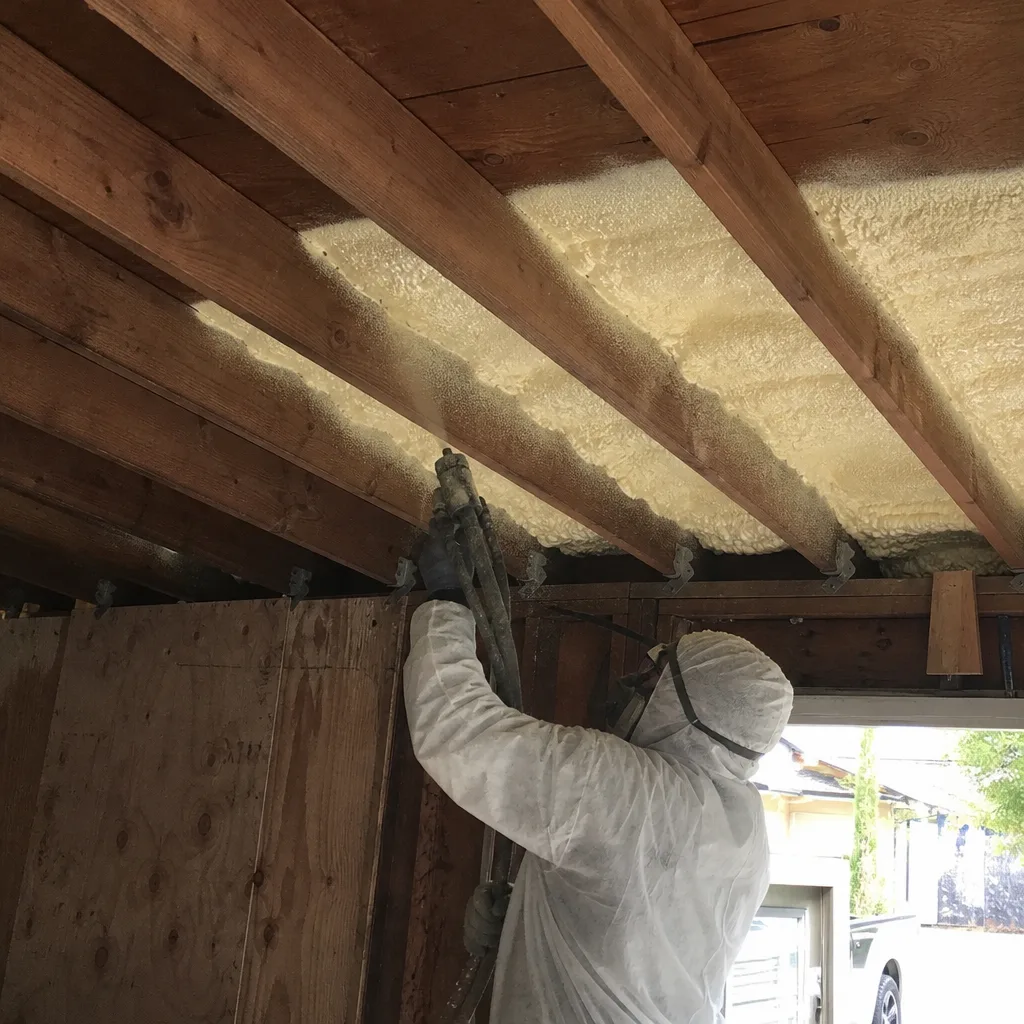
If you already have Icynene foam in your attic, rim joists, or roof deck and it’s underperforming, delaminating, or you’re seeing gaps where air sneaks through, this page is for you. If you’re considering Icynene for a new spray foam job and want honest numbers before anyone steps foot in your house, you’re also in the right place. Chase Whitaker and our crew at Laurel Attic Insulation San Jose work on Icynene systems regularly across San Jose, including older neighborhoods like Willow Glen and the Rose Garden where 1950s and 1960s homes finally get the air seal they were never built with.
How Icynene Products Fail – and How We Fix Them
Icynene makes solid foam, but no spray foam is bulletproof. Here’s what we actually see in San Jose homes, product line by product line:
- Icynene Classic (open-cell) loses its air seal at the soffit line. In San Jose’s older ranch homes, the cavity where the roof meets the exterior wall rarely gets a full foam lift because the original installers couldn’t reach it. The result is a cold stripe along the ceiling perimeter in rooms below. We find it with a thermal camera, cut out the thin or failed section, and re-spray the full cavity so the thermal boundary is continuous. You can’t caulk your way out of this one, the air path is too broad.
- Icynene ProSeal (closed-cell) contracts away from framing over time. Closed-cell foam cures rigid, and in San Jose’s dry summers the wood framing shrinks slightly while the foam does not. That creates hairline gaps between the foam and the studs or rafters, and air moves through those gaps like they’re open windows. We clean the seam, re-flash with a compatible foam, and verify the seal with a blower door before we call the job done.
- Icynene MD-C-200 (medium-density closed-cell) is misapplied around can lights. This one’s a code and safety issue. Homeowners or handymen sometimes spray medium-density foam directly against non-IC-rated recessed light housings, which creates a fire hazard and also a repair liability. We remove the foam around the fixture, confirm the housing is IC-rated or install the proper rated box, then re-insulate with the correct clearance. If you smell anything acrid near a can light, call us before you flip that switch again.
- Icynene LD-C-50 (low-density open-cell) sags on steep roof decks. Open-cell foam relies on the substrate for structure. On a steep San Jose roof deck where the foam was sprayed too thick in one pass, gravity takes a toll and the foam slowly pulls away from the sheathing over a few hot summers. We see this in attics with cathedral ceilings. The fix is cutting out the sagged sections and re-spraying in lifts that cure properly. Thinner passes, better bond, no sag.
- Icynene ProSeal LE has an off-gassing window people forget. The LE line is a lower-emission closed-cell formula, which is great, but it still needs ventilation during the first 24 hours. We’ve been called out to homes in San Jose where someone sprayed ProSeal LE in a sealed attic in August with no air movement and then complained about the smell lingering for weeks. Proper ventilation during cure fixes that. If you have foam that still smells a month after install, something went wrong with the cure or the mixing, not the product itself.
Our Icynene Spray Foam Insulation Process
Here’s how a job with us actually goes, start to finish:
- 1
Call or book online. You reach us at (669) 333-7274, a live person answers, and we schedule a time with live tracking so you know exactly when we land. No four-hour windows.
- 2
We diagnose, not guess. We inspect the foam, run a thermal camera along the problem areas, and look for the actual air path or moisture path that’s causing the issue. For a new Icynene job, we calculate the R-value target for your specific roof assembly and San Jose climate zone.
- 3
You get a written price. Before any foam is sprayed or any section is cut out, you have the number in writing. It includes materials, labor, cleanup, and disposal. No door-step add-ons.
- 4
The work happens. We prep the area, protect surfaces, spray or cut and re-spray as needed, and treat the foam to the correct depth. We use Icynene-compatible materials; when Icynene isn’t the right call for a repair, we’ll tell you and quote a brand from our eight-line supplier list including Owens Corning and Demilec instead.
- 5
We test and prove it. After the foam cures or the repair is complete, we check the seal with a smoke pencil or blower door test and take photos. You get those photos before you pay.
- 6
You pay from a link and get the warranty. Our 365-Day Done Right Promise covers every Icynene job in writing. If it’s not right within a year, we come back and make it right. Free second visit if the repair fails. No argument.
What Icynene Spray Foam Insulation Costs in San Jose
Here’s what we quote for typical Icynene work in San Jose. These are real ranges, not teaser numbers:
- Rim joist spray foam (Icynene ProSeal, closed-cell): $1,800 to $3,200 for a typical 1,800 to 2,500 square foot San Jose home with a crawl space or basement.
- Attic floor open-cell (Icynene Classic or LD-C-50): $2,800 to $5,400 depending on square footage and target R-value. Older Willow Glen ranch homes on the smaller side skew toward the lower end.
- Roof deck closed-cell (cathedral ceiling or fully conditioned attic): $4,500 to $6,400 plus prep for a typical 1,500 to 2,000 square foot roof plane. Steep pitches and multiple valleys push it up.
- Garage ceiling spray foam (unconditioned garage under living space): $1,600 to $2,900 for a standard two-car garage.
- Foam repair or removal of a failed section (any line): $700 to $1,800 depending on access and how much foam needs cutting out. Tight attic access costs more because we’re working in a crawl space with full PPE.
What moves the price: access, ceiling height, how much old material we’re removing, and whether you need closed-cell or open-cell. Closed-cell runs about two to three times the cost per board foot of open-cell, but it also delivers about double the R-value per inch. We’ll show you the math on both before you commit. Estimates are free, and the price we quote is the price you pay. Call (669) 333-7274 and we’ll come out, measure, and hand you a written number.
Why San Jose Homeowners Call Laurel Attic Insulation San Jose for Icynene Work
Most insulation companies in San Jose treat Icynene like a one-size-fits-all product. We don’t. We know the difference between a Classic open-cell failure and a ProSeal shrinkage problem, and we quote the fix accordingly. Every job gets our 365-Day Done Right Promise in writing, a free second visit if the repair doesn’t hold, and before-and-after photos so you see exactly what we did. Our technicians arrive at a live, trackable time, not a vague arrival window. We carry Icynene-compatible materials, and we stock options from seven other brands, including Demilec, Owens Corning, and Rockwool, so if an Icynene-specific material isn’t available that week, we’re not pushing your job back. We also work with Reflectix in specific applications, like radiant barriers in San Jose attics where reflective insulation makes more sense than another foam pass.
Insulation isn’t exciting – but your next utility bill can be. That’s the line Chase Whitaker uses with customers, and it holds. A proper Icynene spray foam job in San Jose cuts air leakage dramatically, and you feel it in the rooms that used to run hot in August and cold in January. We founded this company in 2003 as part of the Relay Home Co. family, and we’ve been doing attic and spray foam work in the South Bay long enough to know which San Jose homes leak and where.
FAQs
It depends on which Icynene line you have and when it was installed. Icynene’s own material warranty typically covers the foam itself if there’s a defect, but installation workmanship issues usually fall outside it. As an independent Icynene service provider, we’re not affiliated with the manufacturer, so we can’t file a warranty claim on your behalf, but we will document the condition of the foam in detail before we touch it so you have what you need if you do file. More importantly, we back our own work with a 365-Day Done Right Promise in writing. If our repair fails within a year, the second visit is free. Call (669) 333-7274 and we’ll walk you through what your warranty actually covers before we schedule anything.
You can repair most Icynene spray foam issues without a full removal. Delamination, shrinkage gaps, thin coverage on rim joists, and soffit-line misses are all repairable in place. Full removal is usually only necessary when the foam was mixed incorrectly at install, exposed to water for a long stretch, or contaminated by rodent activity. We’ll tell you straight up whether a repair makes sense or whether you’re throwing good money after bad. The assessment is free.
In most San Jose neighborhoods we can get a technician out within 48 hours for a diagnostic visit, and emergency calls are handled through our 24/7 live phone line at (669) 333-7274. If you’ve had a roof leak behind spray foam or you smell something burning near a can light, tell the person who answers and we’ll prioritize you.
It depends where it’s going. San Jose’s marine-influenced, dry-summer climate makes open-cell Icynene a great fit for attic floors and interior walls where you want air sealing plus sound dampening without trapping moisture. For rim joists and knee walls, closed-cell Icynene ProSeal makes more sense because it blocks air and water vapor in one pass. Overkill is when someone sells you closed-cell on an attic floor that would be perfectly served by open-cell at a third of the price. We won’t do that.
Almost always cheaper to repair, provided the foam is structurally sound and the failure is localized. Re-spraying a roof deck or full attic can run $4,000 to $6,400 or more, while a targeted repair of a delaminated section or a pulled-back rim joist is usually under $1,800. The exception is when the original installation was done poorly across a wide area, in which case re-spraying is the honest move. We’ll show you the repair number and the replacement number side by side and let you decide. Call (669) 333-7274 for an exact quote, free of charge.
Written by Chase Whitaker, Owner, Laurel Attic Insulation San Jose at Laurel Attic Insulation San Jose, serving San Jose and nearby areas.