
Johns Manville Attic Air Sealing: The San Jose Owner’s Guide
We stock and install Johns Manville-compatible attic air sealing materials throughout San Jose, with most jobs running $450 – $1,400 installed depending on attic size and how many penetrations need sealing. If you’re noticing drafts, rising utility bills, or dust settling faster than it should, the air sealing barrier in your attic has likely degraded or was never properly installed in the first place. Most San Jose homeowners discover the problem after a PG&E bill spike in July or December, when their HVAC system is working hardest against air leaking through gaps around recessed lights, plumbing vents, and top plates.
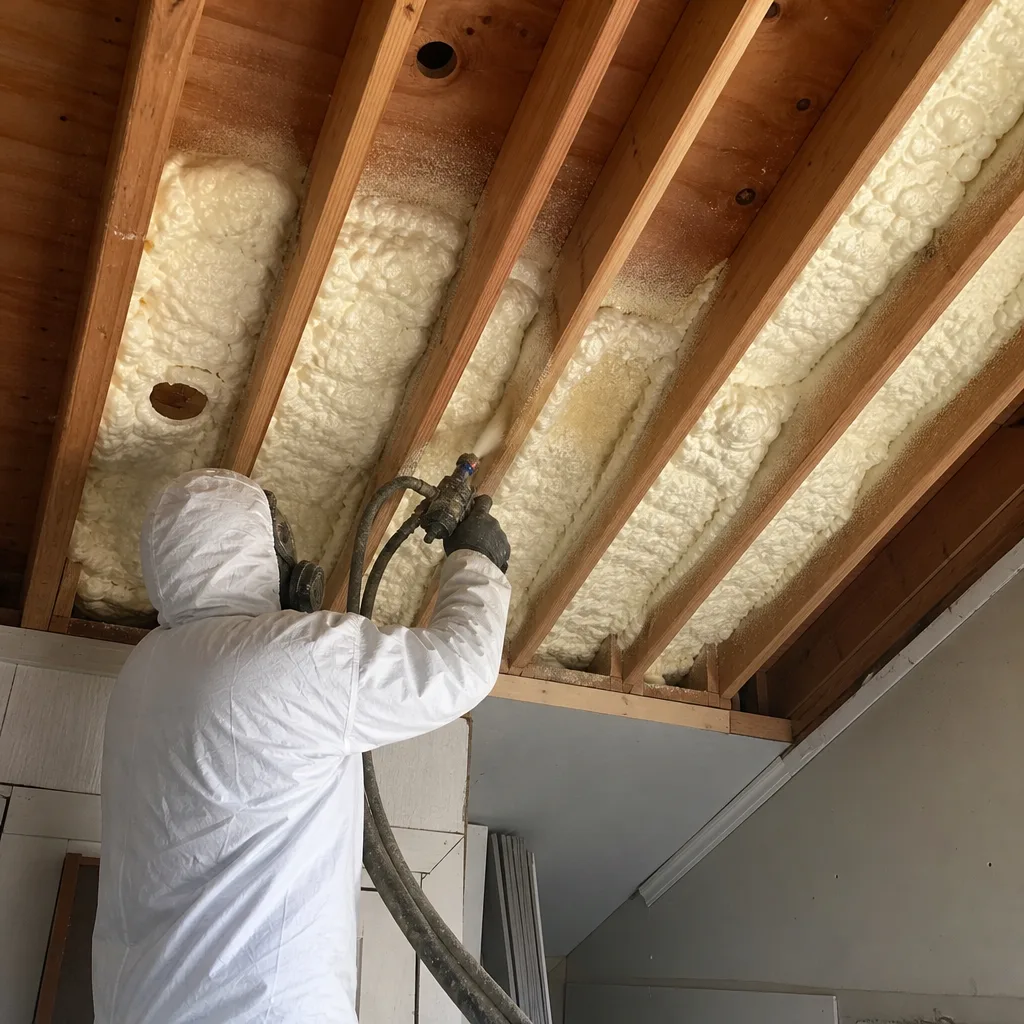
Johns Manville doesn’t manufacture a single “air sealing” product. Air sealing is a system: foam sealants, caulk, gaskets, and weatherstripping work together with JM fiberglass or spray foam insulation to create the thermal boundary. The JM component is usually the insulation itself, while the sealing materials come from brands like Owens Corning, CertainTeed, or specialty manufacturers. What matters is that the sealing materials are compatible with JM insulation and installed correctly around every penetration. We’ve seen too many San Jose attics where blown-in JM fiberglass was installed over unsealed can lights, top plates, and chase ways, leaving the homeowner with an R-38 ceiling that performs like R-19.
Which Johns Manville Models This Applies To
This page applies to any San Jose home with Johns Manville insulation in the attic, whether it’s JM’s ComfortTherm batts, JM’s Spider spray-applied fiberglass, or JM’s blown-in fiberglass or mineral wool. The air sealing work is independent of the specific JM product line, but there are compatibility considerations worth knowing.
The first thing we check is the insulation type and depth. JM ComfortTherm batts have a poly-encapsulated facing that affects how foam sealant bonds around the perimeter. JM Spider, which is a spray-applied fiberglass with an adhesive binder, behaves differently than JM’s Loose-Fill fiberglass when you’re air sealing below it. If you have JM Spider in the attic, we typically need to cut and remove sections around penetrations to seal properly, then reapply. With blown-in JM fiberglass or mineral wool, we can often push aside the material, seal the gap, and fluff it back into place. We also check for any JM vapor barrier or SmartBatt facings that might be trapping moisture against sealed surfaces. The compatibility gotcha most contractors miss: JM mineral wool is denser and holds its shape differently than fiberglass, so the air sealing approach around electrical boxes and recessed light housings has to account for compression characteristics that affect the final R-value. A common San Jose scenario: a homeowner has JM batts from a previous contractor, and now needs air sealing done properly. That’s not a situation for a quick foam-and-go. The existing batts have to be lifted, the gaps sealed, and the batts reinstalled without compression. Blown-in JM insulation needs around 15 – 18 inches of depth for R-38 to R-49 in a standard San Jose attic, depending on the specific product and the age of the home. If your JM insulation was installed before the 2008 Title 24 code update, there’s a good chance the air sealing layer underneath was thin or missing entirely.
Signs Your Johns Manville Attic Air Sealing Is Failing
- High or uneven ceiling temperatures. Rooms directly below the attic run noticeably warmer in summer or colder in winter. Air is leaking through the ceiling plane and bypassing the JM insulation entirely.
- Dust on ceiling fans and upper shelves within days of cleaning. Attic dust and loose-fill particles are being pulled through gaps around ceiling fixtures and light boxes via the stack effect.
- A persistent musty smell in the attic during winter. Warm, moist air from the living space is leaking into the attic, condensing on the underside of the roof deck and on JM fiberglass batts, reducing their thermal performance.
- Ice dams or warm spots on the roof on cold mornings. Heat escaping through unsealed penetrations melts roof surface unevenly, a visible tell that the air sealing layer has failed or was never installed.
- Utility bills climbing year over year with no change in usage. JM insulation only works as specified when the air barrier is intact. Leaks through top plates and chases can cut effective R-value by 30 to 50 percent.
Replacement Cost & What’s Included
Air sealing a San Jose attic typically runs $450 – $1,400 installed, depending on square footage, attic accessibility, and the number of penetrations. Most single-story ranch homes in San Jose with 1,000 – 1,600 square feet of attic space fall between $650 and $950. Here’s the breakdown:
- Assessment and thermal inspection: $75 – $150, credited toward the job if you proceed
- Air sealing materials (foam, caulk, gaskets, weatherstripping): $100 – $300 depending on the size of the attic and the sealant types required for the specific JM insulation present
- Labor for sealing top plates, plumbing vents, electrical boxes, recessed light housings, and chases: $250 – $700 depending on scope and ceiling height
- Adding or topping up JM blown-in insulation to reach R-38 to R-49: $300 – $600 for a typical San Jose attic, if needed
Every job includes a written price before we start, and every repair is covered by our 365-Day Done Right Promise: if it’s not done right, we make it right. We also include a free second visit if the repair fails, no charge, no argument.
DIY or Call Us?
Air sealing itself isn’t inherently dangerous, unlike garage door springs or electrical panel work, but the environment is. Attics in San Jose hit 130°F in summer, and working around recessed can lights, knob-and-tube wiring remnants in older Willow Glen homes, and loose-fill insulation that can hide joists makes a DIY air sealing job genuinely risky. A homeowner can safely inspect visible gaps around the attic hatch or around bathroom fan housings from the attic side, but actually sealing around recessed lights and top plates requires a respirator, protective gear, and a solid understanding of fire-code requirements for foam around electrical fixtures. Certain sealants are combustible near can lights unless rated for fire-blocking, and getting that wrong is a serious fire hazard. Chase Whitaker and our crew do this work every week, including in San Jose’s older ranch neighborhoods where the original air sealing is often decades old. If you’re comfortable looking, check the attic hatch and the visible gaps around vent pipes. If you’re not comfortable climbing into a 130°F attic with a foam gun, that’s exactly what we’re here for. Call (669) 333-7274 for a written quote before you do anything.
FAQs
Properly installed air sealing with quality foam and caulk lasts 20 – 30 years in a San Jose attic, though extreme temperature swings between summer and winter can cause some caulks to dry and crack sooner, especially around metal surfaces like plumbing vents. JM insulation itself lasts for decades, but the air sealing layer degrades faster, which is why we inspect it as part of any attic job.
Yes, in most cases. If only a few penetrations have failed, we can spot-seal those gaps without doing the entire attic. The key is identifying every failure point, not just the visible one. A partial air seal in a San Jose attic with JM insulation leaves the rest of the thermal boundary compromised, and you’ll see only marginal improvement. Call (669) 333-7274 for an inspection; we’ll show you exactly which gaps are leaking.
Most San Jose attic air sealing jobs are done in one day, four to six hours for an average single-family home. Larger homes or attics with extensive JM blown-in insulation that needs to be relocated and reinstalled can take a full day and a half. We’ll give you a written time estimate before we start, and the price doesn’t change at the door.
We stock JM-compatible sealing materials, including fire-rated foam, acoustical caulk, gaskets, and weatherstripping, on our service vehicles for most common attic configurations in San Jose. For less common JM insulation types or larger square footage, we source materials same-day from local distributors. We also work with materials from Owens Corning, Rockwool, CertainTeed, and Reflectix where the job calls for it. If you need something specific, call us before we roll and we’ll confirm what’s on the truck.
Written by Chase Whitaker, Owner, Laurel Attic Insulation San Jose at Laurel Attic Insulation San Jose, serving San Jose and nearby areas.