
Rockwool Attic Insulation: The San Jose Owner’s Guide
If you have Rockwool attic insulation in your San Jose home that’s settled, water-damaged, or simply not hitting the R-value it should, we stock and install Rockwool-compatible batts and blown-in stone wool, and most attic insulation replacements run $1,800 – $4,200 installed depending on square footage and depth needed. Same-day and next-day installation is available in San Jose seven days a week. Most homeowners discover the problem the same way: a room that won’t hold temperature, a heating bill that jumped 30% year over year, or a cold spot in the bedroom directly under the attic hatch. Rockwool is great material. But no insulation lasts forever when heat, moisture, and time team up in a San Jose attic.
Key Takeaways
- Installed Rockwool attic insulation in San Jose typically runs $1,800 – $4,200 depending on attic size and target R-value.
- Rockwool batts fail most often from compression, moisture exposure, and rodent activity in San Jose attics.
- We carry Rockwool-compatible stone wool on our trucks and can usually complete a full attic job in one day.
- Every job includes a written price before work starts, a 365-Day Done Right Promise, and a free second visit if it fails.
- Call (669) 333-7274 for a free estimate from Chase Whitaker and the Laurel Attic Insulation San Jose crew.
Which Rockwool Models This Applies To
Rockwool makes attic insulation in two main product lines homeowners encounter: Comfortbatt (semi-rigid batts, most common in residential attics) and Safe’n’Sound (denser, made for interior soundproofing, sometimes installed in attic knee walls by mistake). Comfortbatt comes in R-15, R-23, and R-30, with sizes cut to fit standard 16″ and 24″ on-center framing. The critical spec to check is the R-value printed on the batt facing, not the thickness. Rockwool’s R-23 Comfortbatt runs 5.5 inches thick, while some competitors’ R-23 batts are closer to 6.5 inches because they use fiberglass instead of stone wool. If you replace one Rockwool product with a different brand of the same labeled R-value, the thickness changes and air gaps appear. That’s an installation detail that quietly kills thermal performance in San Jose ranch attics and two-story homes alike.
For blown-in stone wool, Rockwool manufactures loose-fill insulation rated by installed density, not just R-value. The installer has to hit the correct pounds-per-square-foot for the R-value to hold. Most San Jose attics need R-38 to R-49 to meet current California Title 24 energy code recommendations. We match the material to the job, not to whatever is on the truck. We also stock Reflectix radiant barrier for San Jose attics where summer heat gain through the roof deck is the bigger problem. Laurel Attic Insulation San Jose is an independent service provider, not affiliated with Rockwool, but we install their products because they do exactly what the label says.
Signs Your Rockwool Attic Insulation Is Failing
Most Rockwool insulation doesn’t “break” the way a machine part does. It degrades. Here’s what failing or inadequate attic insulation looks like from inside a San Jose house:
- Rooms that heat up fast in summer and never hold heat in winter. Stone wool slows heat transfer, but once it’s compressed or wet, the trapped air pockets that do the real work are gone. Heat moves through it like it isn’t there.
- Cold spots in bedrooms directly under the attic. Insulation that has shifted, settled, or been moved during a remodel leaves bare sections of ceiling. The temperature difference is usually 5 to 10 degrees from one side of the room to the other.
- A sudden spike in heating costs without a rate change. San Jose homeowners often notice this in January and February when PG&E gas bills arrive. If usage is up 20% or more but the thermostat hasn’t moved, the attic is usually the leak.
- Damp spots, mildew smell, or condensation near attic access points. Rockwool resists moisture better than fiberglass, but it isn’t waterproof. A roof leak or poor attic ventilation will soak it eventually, and wet stone wool loses R-value and starts growing things you don’t want to breathe.
- Visible rodent activity in the attic. Rats and mice love tunneling through stone wool. They nest in it, compress it, and contaminate it. In San Jose neighborhoods with mature trees and older construction, rodent traffic in attics is common. Damaged insulation needs removal, not a patch job.
Replacement Cost & What’s Included
For a typical San Jose single-family home with a 1,200 to 1,800 square foot attic, Rockwool attic insulation replacement runs $1,800 to $4,200 installed. Smaller attics or spot repairs start around $900. Larger homes, attics needing old insulation removal first, or targets above R-49 push the number higher. The price includes the material, the removal of any failed insulation that needs to come out, air sealing around ceiling penetrations when required, and full installation to your target R-value.
| Scope of Work | Typical San Jose Price Range |
|---|---|
| Spot repair, one or two batts replaced | $150 – $400 |
| Blow-in over existing Rockwool, 1,200 sq ft attic | $1,400 – $2,200 |
| Full removal + new Rockwool batts, 1,500 sq ft attic | $2,800 – $4,200 |
| Air sealing + Rockwool to R-49, large or multi-zone attic | $3,500 – $5,500 |
Every quote is written and delivered before any work starts. No doorstep adjustments, no surprises. The work is covered by our 365-Day Done Right Promise: if it’s not done right, we make it right, in writing. And if the repair fails, the second visit is free. That’s the standard Chase Whitaker set when he started building the Laurel Attic Insulation San Jose crew around the Relay Home Co. model: live arrival tracking, before-and-after photos, and a digital invoice you can pay from a link.
DIY or Call Us?
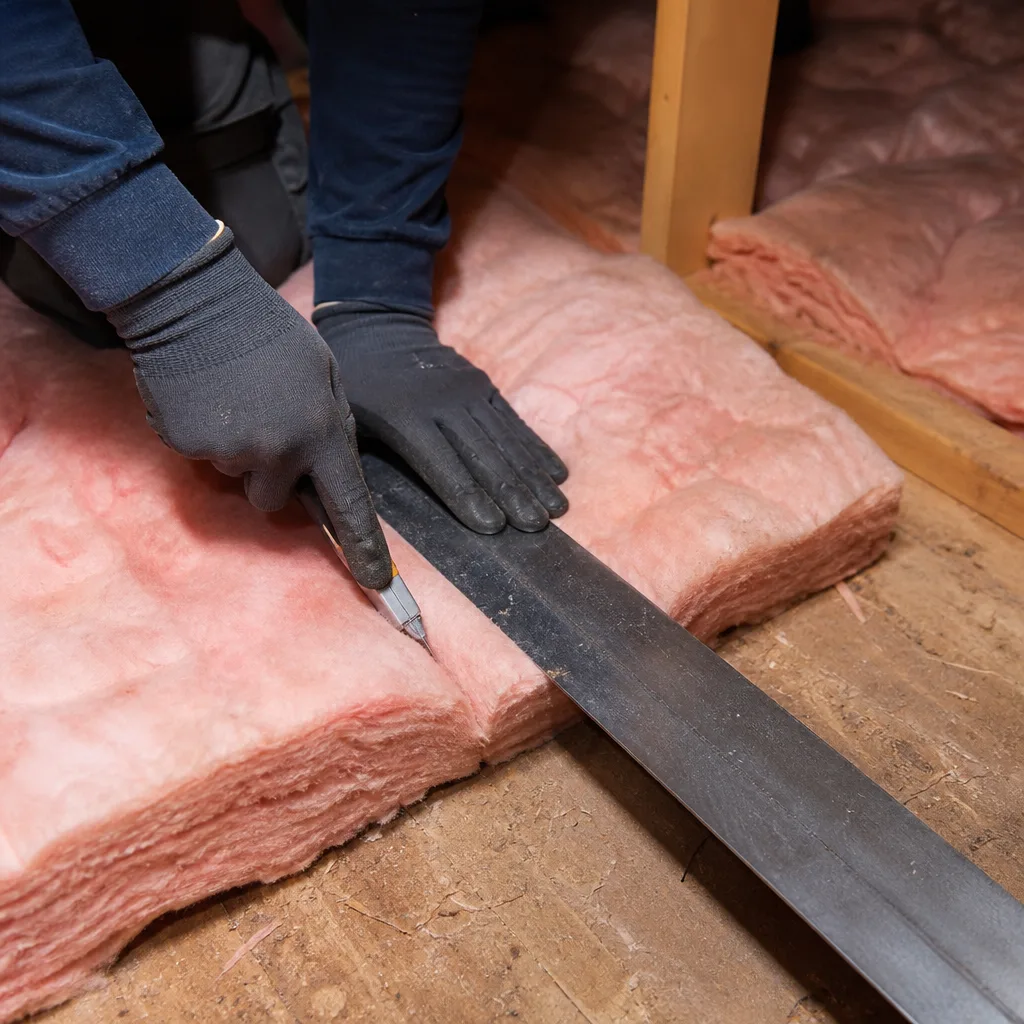
Handling Rockwool batts is low-risk. There’s no high-tension spring, no electrical panel, no gas line. If you’re comfortable crawling in an unfinished attic with proper PPE including gloves, long sleeves, a dust mask, and eye protection, you can replace a displaced batt or two yourself. Rockwool is easier to cut cleanly than fiberglass. But most San Jose attics have low clearance, loose fill covering joists, and ductwork in the way. One wrong step through a ceiling is a $1,000 drywall repair, not counting the fall. And a patch job that doesn’t fix the underlying air leak is money spent twice. Insulation isn’t exciting, but your next utility bill can be. We handle the crawl so you don’t have to. If you just want it done right and done today, the number is (669) 333-7274.
FAQs
With proper installation and a dry attic, Rockwool batts hold their R-value for 50 years or more. Stone wool doesn’t degrade the way organic materials do, but San Jose attics with poor ventilation, recurring roof leaks, or rodent activity can cut that lifespan dramatically. Wet compressed stone wool needs removal and replacement, not just top-up.
Yes, in most cases. If one section is compressed, soaked, or torn out by rodents, we remove the affected area, check for air leaks and entry points, and install fresh Rockwool or compatible stone wool to match the surrounding R-value. Full replacement is only necessary when moisture or contamination has spread through the majority of the attic.
Most San Jose attic insulation replacements are finished in one day, typically 4 to 7 hours for a standard single-family home. Removal of old failed insulation adds time, and air sealing or rodent remediation pushes it to a second day in rare cases. Call (669) 333-7274 for a specific time estimate.
We carry Rockwool Comfortbatt in R-15, R-23, and R-30, plus loose-fill stone wool and Reflectix radiant barrier, on our installation vehicles serving San Jose. That means most jobs can be quoted and completed same-day without a round trip to the supply house. If your attic needs a specific depth or R-value, we’ll confirm availability when you call.
Written by Chase Whitaker, Owner, Laurel Attic Insulation San Jose at Laurel Attic Insulation San Jose, serving San Jose and nearby areas.