
Rockwool Spray Foam Insulation in San Jose: What to Know First
Independent Rockwool spray foam insulation service in San Jose typically takes one to two days for most homes, with open-cell jobs running $1,800 – $4,200 and closed-cell work landing between $3,500 – $8,500 depending on square footage and cavity depth. We’re Laurel Attic Insulation San Jose, and we work on Rockwool-equipped homes throughout the city, including Willow Glen, Almaden Valley, and Rose Garden. This page is for homeowners who already have Rockwool batts, boards, or existing insulation and need spray foam added, layered, or replaced around it. Call (669) 333-7274 for a written quote before any work starts.
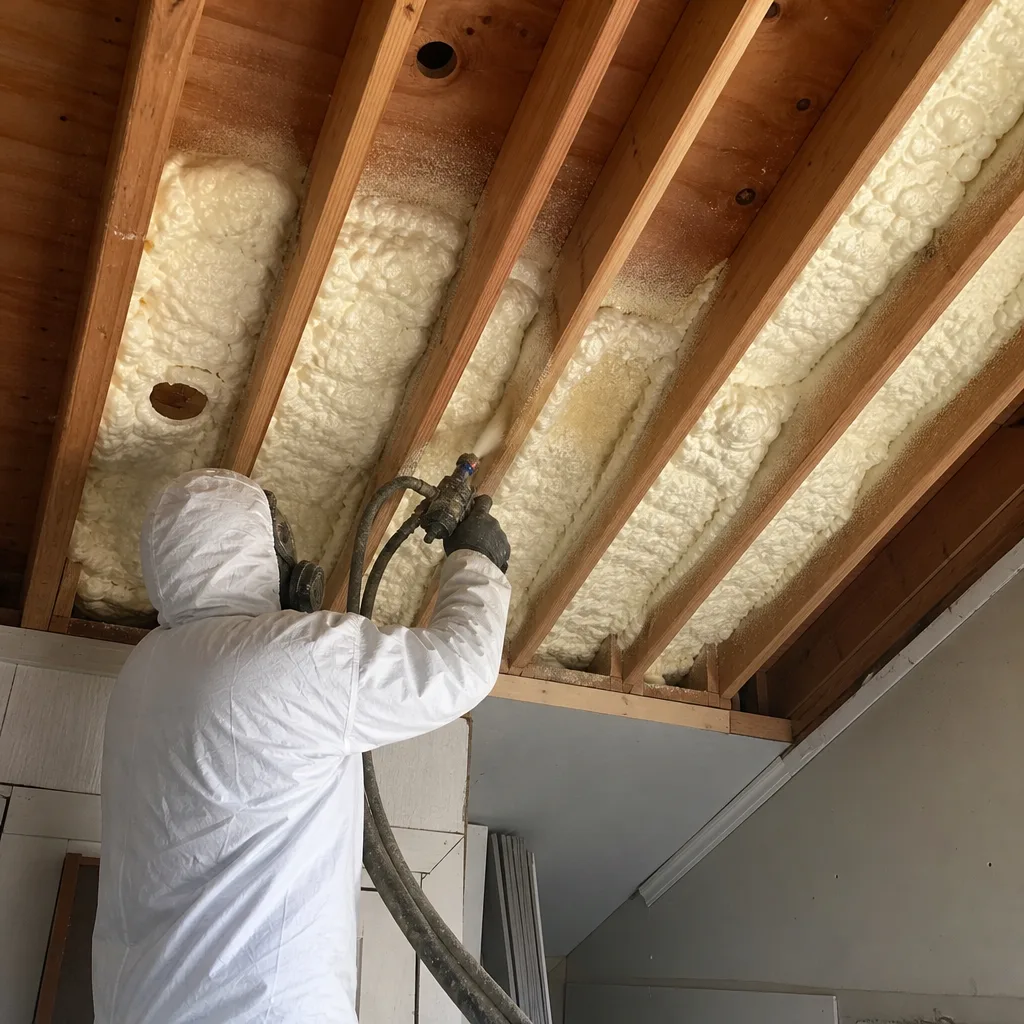
How Rockwool Products Fail – and How We Fix Them
Rockwool stone wool is a solid product, but it has specific failure patterns we see regularly in San Jose homes. Here’s what actually goes wrong:
- Rockwool ComfortBatt compression in cathedral ceilings. When ComfortBatt gets squeezed into a cavity that’s too shallow, its R-value drops hard. A 5.5-inch batt compressed to 3.5 inches loses roughly 20% of its thermal resistance. We see this constantly in 1960s ranch homes around Cambrian where roof pitches don’t match modern batt dimensions. The fix is removing the compressed batt and replacing it with open-cell spray foam that fills the actual cavity depth at full R-value.
- Rockwool Safe’n’Sound settling behind knee walls. Safe’n’Sound is designed for acoustic performance, not thermal. Homeowners sometimes install it in attic knee walls thinking it’s insulation, then wonder why upstairs rooms hit 85 degrees in August. The stone wool isn’t failing; it’s being used for the wrong job. We remove it from thermal locations and apply closed-cell foam to the back side of the knee wall, which air-seals and insulates in one step.
- Rockwool ComfortBoard moisture absorption at the rim joist. Exterior stone wool boards can wick moisture in San Jose’s winter fog cycles, especially in homes near the Guadalupe River corridor where humidity sits higher. Once saturated, ComfortBoard loses thermal performance and can hold water against the sheathing. Our fix is pulling the wet board, treating any surface mold with a borate solution, and replacing the assembly with closed-cell spray foam at the rim joist, which acts as its own vapor retarder and air barrier.
- TopRock DD plus board gaps at penetrations. In commercial-style flat roof assemblies we see on some mid-century San Jose homes, the rigid mineral wool boards leave gaps around plumbing vents, electrical conduits, and HVAC penetrations. Those gaps become thermal bypasses. A 1-inch gap around a single vent pipe moves more conditioned air than you’d think over a full year. We fill every penetration with low-expansion foam before laying any new insulation, so the ceiling plane is actually continuous.
- Rockwool FlexiBatt over-sprayed with the wrong foam chemistry. If a previous contractor sprayed open-cell foam directly over FlexiBatt without a separation layer, the foam can bond to the batt and tear it apart during temperature cycling. Stone wool doesn’t flex like fiberglass, so the foam’s expansion and contraction rips the batts loose from the studs over time. We remove the damaged material, reset the framing plane, and either install new batts properly or switch to a full foam application, depending on the wall assembly.
Our Rockwool Spray Foam Insulation Process
Here’s how a typical Rockwool-plus-spray-foam job goes with Laurel Attic Insulation San Jose, from the first call to the final photo:
- 1
Call and schedule. You reach a live person at (669) 333-7274, tell us what’s going on, and we book a window that works. You get a live arrival time on the day of the job, not a four-hour guess.
- 2
On-site diagnostic. Chase Whitaker or one of our techs walks the attic, checks the existing Rockwool product, measures cavity depths, and looks for air leaks. We’ll tell you what the R-value actually is right now, before we quote anything.
- 3
Written price. Before any work starts, you get a dollar amount in writing. Not an estimate range. The price. If we find something unexpected mid-job, we stop, tell you, and agree on any change before proceeding.
- 4
Material decision. We match the foam to the job: open-cell for interior cavity fill where you want breathability, closed-cell for rim joists and exterior-facing surfaces where you need a vapor retarder. If Rockwool product stays in place, we protect it. If it comes out, we tell you why.
- 5
Application and cleanup. We spray, trim, and clean. Photos are taken before, during, and after. You get them all.
- 6
Walkthrough and guarantee. We show you the finished work, give you the written 365-Day Done Right Promise, and send the digital invoice you can pay from a link. If it’s not right within a year, we come back. No charge.
What Rockwool Spray Foam Insulation Costs in San Jose
Most San Jose homes combining Rockwool remediation with spray foam run between $1,800 and $8,500, and the spread comes down to three things: square footage, foam type, and how much existing Rockwool needs to be removed or worked around. Adding open-cell to a 1,200-square-foot attic where the existing ComfortBatt stays in place usually lands around $2,500 – $3,800. Switching a rim joist from failed ComfortBoard to closed-cell runs $1,500 – $2,800 for a typical two-story. A full roof-deck closed-cell application on a 1,500-square-foot ranch runs $5,500 – $8,500. What moves the price: access (crawl spaces, steep pitches), disposal if we’re pulling saturated Rockwool, and the cavity depth needed to hit code R-value. Call (669) 333-7274 and we’ll give you a written price for your specific house. Estimates are free.
Why San Jose Homeowners Call Laurel Attic Insulation San Jose for Rockwool Work
We’re an independent Rockwool service provider, which means we’re not tied to any manufacturer’s warranty program, and we’re not going to upsell you into a brand you don’t need. We stock and install eight brands: Owens Corning, Johns Manville, Knauf, Rockwool, CertainTeed, Icynene, Demilec, GreenFiber, and Reflectix for radiant applications. That matters because your house determines the right material, not our truck inventory. Every job comes with the Relay Visibility Guarantee: a written price before work starts, live technician tracking, before-and-after photos, and the 365-Day Done Right Promise in writing. If a repair fails within a year, we return free. No argument, no charge, no phone tag. Insulation isn’t exciting, but your next utility bill can be.
FAQs
Adding spray foam to an assembly that already contains Rockwool product does not void the Rockwool warranty, provided the Rockwool was installed correctly and isn’t damaged during our work. We’re an independent Rockwool service provider, not a manufacturer-authorized installer, so we don’t manage warranty claims directly, but we’re careful to protect any Rockwool material that stays in place. Call (669) 333-7274 if you want us to check your specific installation before we quote.
No, spray foam should not be applied over Rockwool batts. Open-cell foam will bond to the stone wool and tear it apart during temperature cycling, and closed-cell foam needs direct contact with the substrate to work. The right move is removing the batts or leaving an air gap and a separation layer. We’ll tell you which applies to your house after we look at the assembly.
For small problems like localized gaps or compressed batts in one section of an attic, repair is usually cheaper, around $400 – $900. For widespread issues like saturated ComfortBoard at the rim joist or Safe’n’Sound wrongly installed as thermal insulation, replacement with spray foam is typically the better long-term investment, and most San Jose homes in that situation run $1,800 – $5,000 depending on scope. We’ll show you both numbers before you decide.
Most Rockwool and spray foam jobs are scheduled within three to five business days, and we offer same-week appointments during slower months. You get a live arrival time, not a window. Call (669) 333-7274 and a real person answers, 24/7, no voicemail queue.
No, we work on all major insulation brands, including Owens Corning, CertainTeed, Johns Manville, Knauf, Icynene, Demilec, GreenFiber, and Reflectix. Rockwool is one of eight brands we stock and service, which means we won’t steer you into a product just because it’s what we have on the truck.
Written by Chase Whitaker, Owner, Laurel Attic Insulation San Jose at Laurel Attic Insulation San Jose, serving San Jose and nearby areas.